2026年8月10日 星期一

宇宙秩序的死訊:當「天朝」被迫學會看地圖


宇宙秩序的死訊:當「天朝」被迫學會看地圖

歷史向來是一齣由自命不凡的靈長類主演的荒謬喜劇,直到鐵拳砸在臉上,才驚覺自己從來不是宇宙的中心。在漫長的傳統歲月裡,中國的士大夫與皇帝活在一個無比舒適的宇宙神話中。皇帝是天子,統治的是「天下」——那不是一個有著明確海關與邊境線的現代民族國家,而是一個普世的道德文明。在這種視角裡,君王的仁心與道德能感召四方,天災人禍則是上天給予的道德警告。這套邏輯宏大、圓滿,且完美地將外部世界的複雜性隔絕在外。

然而,十九世紀的西方列強用堅船利炮把這套夢幻泡影轟得粉碎。當鴉片戰爭的硝煙散去、賠款清單送到紫禁城時,清帝國被迫接受了一個殘酷的現實:道德的優越感擋不住開花大砲,上天早已不再庇護這個自大古老的帝國。

為了在列強環伺的殘酷世界中活下來,這片土地上的知識分子不得不進行一場痛苦文明切除手術。以梁啟超為代表的思想家痛苦地承認,傳統的「天下觀」破產了,中國不再是宇宙的中心,而只不過是西伐利亞體系下無數弱小民族中的一個。為了自強,五四運動高舉起「賽先生」與「德先生」的大旗,將原本充滿詩意與道德秩序的宇宙,徹底閹割成一個弱肉強食、講求科學與效率的達爾文式競技場。

人類骨子裡對崇高虛榮的迷戀,總是深不見底。我們的演化本能渴望成為被神明眷顧的主角,直到現實的鐵蹄踐踏了神壇,我們才狼狽地丟掉傳統,換上對手的西裝。天朝帝國的隕落留下了一個冷酷的歷史教訓:當古老的信仰碰上現代的工業暴力,神明永遠會第一時間打包行李,而留下來的凡夫俗子,則必須在冰冷的民族主義廢墟中,學會如何向現實低頭。


The Death of the Cosmic Order: When Heaven Was Demoted to a Border Patrol


The Death of the Cosmic Order: When Heaven Was Demoted to a Border Patrol

History is a tragicomedy starring primates who thought they were the center of the universe, only to discover they were just another species on a crowded, indifferent rock. For millennia, the Chinese imperial mind operated on a comforting, cosmic scale. The Emperor was the Son of Heaven, ruling over Tianxia—"all under heaven." This wasn't a nation-state with rigid borders and customs checkpoints; it was a universal moral civilization, a grand celestial order where the ruler’s virtue kept the cosmos in balance. If crops failed or barbarians breached the gates, it wasn’t a geopolitical failure; it was a moral disruption, a sign that Heaven had withdrawn its mandate. It was cozy, absolute, and completely detached from the brutal realities of global geography.

Then came the nineteenth-century gunboats. When Western and Japanese imperial powers battered through Qing defenses, they didn't just shatter porcelain and coastal forts; they destroyed a metaphysical worldview. The devastating military defeats proved a humiliating truth: moral virtue does not stop a cannonball. The universal moral cosmos could no longer protect its own children.

To survive the Darwinian meat grinder of Western modernity, China had to perform a radical lobotomy on its own civilization. Intellectuals like Liang Qichao looked around and realized that Tianxia was dead. China was no longer the undisputed center of the universe; it was merely a bruised, weak nation-state among many, forced to play by the ruthless Westphalian rules of sovereign borders and military might. The ancient mandate of Heaven was unceremoniously traded in for "Mr. Science" and "Mr. Democracy" during the May Fourth Movement of 1919. The world was stripped of its harmonious moral poetry and reduced to a cold, mechanical arena where only the ruthless survived.

Human nature is pathologically attached to grand illusions until reality forces a brutal awakening. Our evolutionary wiring craves the psychological safety of being the chosen center of the cosmos. When that illusion is smashed by superior force, we don't become enlightened philosophers—we scramble to adopt the exact machinery of our oppressors just to avoid being eaten. The death of Heaven teaches us a timeless, cynical lesson: whenever a sacred cosmic order collides with modern industrial firepower, the gods always pack their bags, and the nation-state sends you the bill.


思考的代價:康德如何毀掉了人類的舒適圈


思考的代價:康德如何毀掉了人類的舒適圈

歷史往往充滿了這種黑色幽默:一群習慣了被圈養的靈長類,偏偏要追求什麼星辰大海,結果把自己摔得粉身碎骨。

當年的啟蒙運動大哲康德,意氣風發地向人類喊出了那句響徹雲霄的口號:「敢於知曉!勇於使用你自己的理智!」聽起來多麼熱血沸騰。彷彿只要掙脫了宗教的枷鎖、推翻了上帝的權威,每個人都能搖身一變,成為獨立自主、理性閃耀的現代公民。

然而,康德低估了人類骨子裡的生物本能。我們打從演化開始,就是群居的部落動物,習慣了依附絕對的權威、習慣了有一雙看不見的大手在雲端替我們安排好一切。那張由神聖啟示織成的安全網,雖然把人的視野框在狹窄的籠子裡,卻也給了我們無與倫比的心理安穩。

當康德一腳踢翻這座神聖的殿堂,把冷冰冰的「理性」塞進每個人手中時,他以為自己解放了人類的靈魂,卻沒料到他釋放的是一場世紀大孤獨。上帝死了,權威倒了,每個人突然都被迫赤裸裸地面對這個冷漠而巨大的宇宙。你不再是神譜中的天之驕子,而只是一隻在虛無荒野中掙扎求生的無毛靈長類。房貸、焦慮、存在主義的虛無,像潮水般湧來。

人類對自由的渴望永遠只是嘴上說說,實際上我們骨子裡最恐懼的就是「自己負責」。我們一邊享受著理智帶來的科技便利,一邊在深夜的失眠中懷念那個不需要思考的溫暖牢籠。康德當年的慷慨激昂,不過是把人類從一個舒適的精神病院裡趕了出來,丟進了寒風刺骨的現代停車場。下次當你深夜滑著手機、被莫名的焦慮壓得喘不過氣時,別忘了,這就是當年自作聰明「開始思考」的代價。


The Cost of Thinking: How Kant Accidentally Ruined Human Comfort


The Cost of Thinking: How Kant Accidentally Ruined Human Comfort

History is a parade of clever monkeys who constantly break things they don’t understand, only to cry when the roof leaks. Back in the Enlightenment, Immanuel Kant gave humanity a rousing pep talk with his famous battle cry: “Sapere aude!”—have the courage to use your own understanding! It sounded magnificent on parchment. Throw away the medieval crutches, stop waiting for divine whispers, and think for yourself!

Naturally, humans did what they always do with dangerous tools: they cut their own fingers off. By demolishing the absolute authority of the church and tossing out the cozy, unquestioned cosmic safety net where God arranged every pebble in the universe, Kant unlocked the cage. But our evolutionary wiring was never built for cosmic independence. We are tribal primates who thrive on unquestioned hierarchies, warm dogmas, and the cozy illusion that a benevolent alpha is looking after us from the clouds.

Stripping away divine revelation didn't turn everyone into a happy philosopher; it threw terrified apes into the cold, drafty wilderness of existential alienation. Suddenly, you weren’t a cherished child in a grand divine play; you were just a hairless biped hurtling through a silent, indifferent void on a dying rock, forced to figure out your own mortgage, taxes, and meaning of life. The intellectual freedom we fought for turned out to be a magnificent trap—a one-way ticket to chronic anxiety, loneliness, and the modern therapist's couch.

Human nature remains forever allergic to true autonomy. We crave freedom in theory, but crave a master in practice. Kant thought he was enlightening the world, but he merely evicted humanity from a warm, padded asylum and left us to wander a freezing parking lot. The next time you find yourself scrolling mindlessly at 3 AM, paralyzed by dread, remember: this is what happens when you finally take the philosopher's advice and start thinking for yourself.


十九世紀的流量密碼:當假新聞穿上精美年畫的外衣


十九世紀的流量密碼:當假新聞穿上精美年畫的外衣

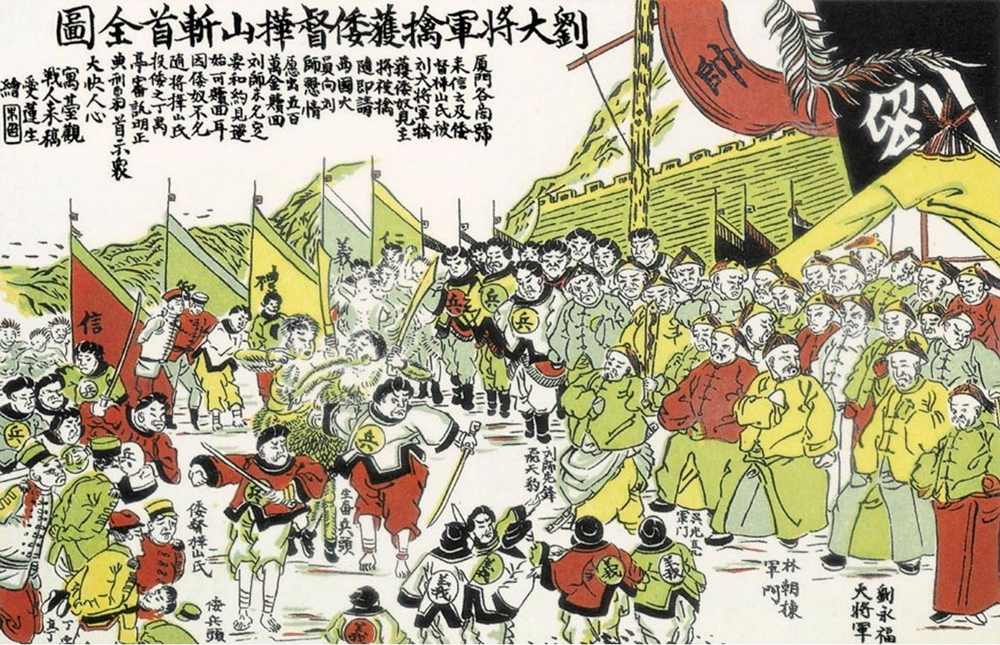
歷史向來不是什麼冰冷客觀的檔案庫,它更像是一場由恐慌人類精心編織的心理安慰劇。時間回到一八九五年,清朝在甲午戰爭中慘敗,簽下割讓臺灣與澎湖的不平等條約,如同輸光家產的賭徒般狼狽。此時,率領殘部在臺灣堅持抗日的黑旗軍將領劉永福,瞬間成了滿清百姓心中的民族救星。面對殘酷血淋淋的現實,焦慮的人們不願意接受失敗,於是,史上最精緻的手工假新聞就此誕生。

當時的大上海是遠東的出版中心,市面上除了黑白畫報,還有色彩鮮豔的新聞年畫。其中一張流傳甚廣的彩色畫作,活靈活現描繪了劉永福陣前生擒日本首任臺灣總督樺山資紀、甚至將其斬首的壯觀場景,旁邊還有「生番」勇士助陣的熱血情節。畫面張力十足、爽感滿分,唯一的缺點是:這全都是畫師憑空捏造的幻想。

這究竟是惡意造謠,還是集體的精神自慰?答案是後者。在甲午戰敗、舉國陷入低迷與屈辱的社會氛圍中,上海的畫家們接收到劉永福仍在抵抗的微弱消息,立刻將真假難辨的傳言無限放大,神化劉將軍的戰功。這類年畫在中國與臺灣之間來回流傳,滿足了雙方對抗日勝利的強烈渴望。用現代的眼光來看,這些圖像百分之百是偽造的「假新聞」;但在當時,它卻是撫慰社會創傷、投射集體焦慮的精神鴉片。

人類基因裡對「真相」的追求,向來在「自我感覺良好」的渴望面前不堪一擊。無論是今天演算法推波助瀾的網路假訊息,還是一百多年前上海街頭販售的抗日年畫,人類從未改變:我們不喜歡面對失敗的真相,我們隻想看見英雄痛宰反派的爽快劇本。下次當我們嘲笑古人好騙時,別忘了人類製造幻覺的功力從未退步,隻不過是把木刻年畫換成了發光的手機螢幕罷了。


The 19th-Century Clickbait: When Fake News Was Hand-Painted Propaganda


The 19th-Century Clickbait: When Fake News Was Hand-Painted Propaganda

History is rarely a sterile archive of cold, objective facts; more often, it is a grand, comforting fairy tale manufactured by terrified humans who simply refuse to accept reality. Step back to 1895. The Qing Empire had just suffered a humiliating defeat in the First Sino-Japanese War, forced to hand over Taiwan and the Pescadores to Japan like a bankrupt gambler paying off a debt. Enter General Liu Yongfu, the rugged commander who dug in his heels to lead Taiwan’s short-lived Democratic Republic resistance. To a shell-shocked mainland public desperate for a shred of dignity, Liu became an instant folk hero. And what do humans do when reality is too grim to bear? They invent a better one.

Enter the magnificent world of late-nineteenth-century mass media. Shanghai was the booming publishing hub of the era, churning out black-and-white pictorials and vibrant, color-saturated "news New Year prints." Among them was a masterpiece of wishful thinking: a dazzling illustration depicting General Liu Yongfu single-handedly capturing Japan's Taiwan Governor-General, Kabayama Sukenori, while decapitating him, flanked by enthusiastic indigenous allies joining the anti-Japanese crusade. It was thrilling, dramatic, and entirely, catastrophically fake.

Was it malicious disinformation? Not quite. It was something far more human: 19th-century clickbait born of collective desperation. Crushed by military defeat and weeping over indemnity payments, Chinese society craved a hero. When whispers drifted across the strait about Liu’s fierce resistance, Shanghai illustrators took loose rumors, mixed them with pure, unadulterated fantasy, and weaponized imagination to soothe an entire nation's bruised ego. These prints flowed back into Taiwan, creating a bizarre feedback loop where rumors birthed art, and art birthed national myths. Today, we would flag these prints with a stern community note warning of manipulated media. Back then, they were psychological armor—a collective coping mechanism wrapped in red and gold ink.

Human nature remains profoundly unchanged by our shiny new algorithms. Whether it is a viral panic on social media today or a hand-painted woodblock print in 1895, our evolutionary wiring hungers for narrative over truth. We don't want to hear that our side is losing; we want to see the villain beheaded by our champion, even if he is sitting safely in a Shanghai studio holding a paintbrush. The next time you roll your eyes at modern propaganda, remember that fake news didn't start with the internet—it started the moment humans discovered they could print their own delusions.


老虎的菜單:中產階級不是為了民主出走,而是發現自己成了主菜


老虎的菜單:中產階級不是為了民主出走,而是發現自己成了主菜

長期以來,西方書齋裡的民主鬥士總是抱著一種浪漫的幻想:以為所有拖家帶口離開中國的富裕階層,必然是受到了西方自由精神的感召,滿懷著對民主人權的崇高信仰才選擇出走。這簡直是天大的誤解。正如那些真實「潤」出去的中產階級所展現的,他們多半不是什麼民運分子,反而是過去在體制內混得風生水起、甚至比西方中產過得更舒服的既得利益者。他們對共產黨的熟悉程度,遠超過那些只懂空談理論的海外評論家。

這群人的生存哲學,其實就是一套高段位的叢林生存法則。正如受訪者大龍所比喻的:你生活在一個有老虎的危險叢林裡,但你熟悉牠的習性。只要不去招惹牠、按時餵食,你就能在叢林的中上層過上極度舒適的生活——靠著廉價家政與體制紅利,物質享受甚至比外國中產還要優渥。對他們而言,自由民主從來不是抽象的宗教信仰,只要老虎不威脅到日常生活,他們完全可以跟這套制度相安無事。

然而,歷史的殘酷之處正在於:老虎可以共富貴,卻絕對不可以共患難。當經濟繁榮不再、當叢林的資源枯竭時,凶猛的野獸絕不會冒險跨界去跟別人爭食,而是會第一時間把爪子轉向自己地盤裡養得油光水滑的動物。過去那些以為只要乖乖聽話就能歲月靜好的精算師們,直到鐵拳砸在自己頭上時才驚覺,當權力陷入危機,曾經的免死金牌瞬間變成了催命符。

人類基因裡對安逸與可預測性的追求,總是讓人願意忍受局部的壓迫,直到風險超越了容忍極限。中國這波中產階級的大逃亡,不是因為他們一夜之間成了自由主義的信徒,而是因為他們終於讀懂了歷史最黑暗的底牌:在絕對權力的叢林裡,當老虎肚子餓了的時候,最先被端上餐桌的,永遠是那些自以為最安全、養得最肥美的家畜。


The Tiger’s Menu: Why China’s Elite Didn't Flee for Democracy, But to Escape the Dinner Table


The Tiger’s Menu: Why China’s Elite Didn't Flee for Democracy, But to Escape the Dinner Table

For years, starry-eyed Western observers and naive pro-democracy purists have clung to a comforting delusion: that every affluent Chinese citizen who packs their bags and leaves the mainland must be a closeted Thomas Jefferson, yearning for the sweet embrace of Western liberty. It is a wonderfully cinematic narrative, completely detached from human reality. As recent insights from the diaspora reveal, the people packing up and getting out—the runren—are often the exact opposite of ideological crusaders. They are seasoned insiders, successful entrepreneurs, and upper-middle-class pragmatists who knew the system inside and out. They didn't flee because they suddenly fell in love with ballot boxes; they fled because they realized they were about to become the main course.

To understand these pragmatists, you have to abandon Western political theory and embrace the cold, evolutionary logic of the jungle. As one insider brilliantly put it, living under an authoritarian regime is like inhabiting a dangerous forest. Yes, there are tigers. But you spend decades learning their habits, mapping their lairs, and mastering the unspoken geography of survival. As long as the ecosystem produces enough meat, you stay out of the tiger's way, toss it a snack when required, and carve out a remarkably comfortable, high-end lifestyle. Thanks to a domestic economy fueled by cheap labor and structural advantages, these insiders actually enjoyed a level of domestic luxury that would make a Western executive weep. They weren't fighting the tigers; they were coexisting with them.

The fatal miscalculation, however, lay in trusting a predator's appetite during a famine. A tiger can share your prosperity when the forest is flush with game, but it cannot share your hardship. When economic growth stalls and the belly of the state begins to rumble, the beast doesn't venture outside its borders to hunt foreign prey. It turns inward, eyeing the fat, complacent animals living comfortably within its own territory. The moment the unwritten social contract of mutual survival is shredded by arbitrary power, the middle-class "Tarzan" realizes that his cozy treehouse is standing right in the middle of a slaughterhouse.

Human nature is relentlessly transactional until the moment of terror arrives. Our evolutionary wiring is designed to calculate immediate risks and optimize comfort, tolerating vast amounts of tyranny as long as the math works and the tigers stay predictable. But totalitarianism is an escalating hunger. The tragedy of the recent diaspora is not that China's elite have suddenly discovered a passion for Enlightenment philosophy, but that they finally understood a timeless historical truth: in a closed cage, when the food runs out, the king eats his favorite pets first.


模範生的叛逃:當精算師發現合約只是一張廢紙


模範生的叛逃:當精算師發現合約只是一張廢紙

歷史從來不是由那些衝上街頭高喊口號的革命家推動的,它往往是由一群精打細算、只想過好日子的中產階級悄悄按下了移民鍵。故事裡的小愛是上海土生土長的大廠精英,創過業、買了房,過著她口中「恰到好處的生活」;南京的趙叔則是安分守己的培訓班老闆,事業穩定、得閒飲茶。這兩個人身上找不到半點反動因子。按小愛的說法:「雖然不公平,但還算合理。」對他們來說,只要體制能兌現經濟回報,政治權利這種奢侈品少一點也無所謂。

他們的生存哲學完美體現了人類的功利本能:只要摸清楚叢林裡的遊戲規則,知道哪隻老虎不咬人,大家就能相安無事。他們深信一條心照不宣的底線——政府再怎麼折騰,至少不會跟錢過不去,總歸要在乎經濟發展。然而,時代的鐵拳從不按牌理出牌。二○二一年北京無預警落下「雙減」政策,新東方兩天內蒸發大半市值,全國補教機構瞬間灰飛煙滅。趙叔雖然逃過一劫,卻親眼目睹了政策如刀割般的血腥殺傷力。

真正的崩潰發生在二○二二年的上海封控。小愛驚覺,自己多年來深信的「經濟底線」根本不存在,機器運轉時根本不管你死活。加上孩子在江蘇面臨日益收緊的高考與向下流動的宿命,曾經讓他們安全感爆棚的「體制內紅利」,瞬間變成隨時會要命的枷鎖。當合約的另一方開始撕毀所有規則、隨意沒收你的確定性時,昔日的精算師們終於清醒了。

於是,最安分守己的模範生們用腳投了票:一個去了日本,一個移民澳洲。他們的出走不是因為突然覺醒成了民主鬥士,而是人類基因中最原始的求生本能——當叢林不再按邏輯殺人,留下來的都是傻子。


The Breaking Point of the Pragmatist: When the House Rules Change Overnight


The Breaking Point of the Pragmatist: When the House Rules Change Overnight

History is not written by radical revolutionaries charging barricades; it is quietly authored by exhausted pragmatists who finally realize that the spreadsheet they signed up for has been shredded by the house. Meet Xiao Ai and Uncle Zhao—the poster children of China’s modern economic miracle. Xiao Ai, a native Shanghainese and veteran of the BAT tech giants, built a comfortable life through entrepreneurship, property ownership, and high-tech hustle. Uncle Zhao ran a stable adult education center in Nanjing, spending his afternoons playing basketball and sipping tea. Neither of them was a dissident, a human rights lawyer, or a revolutionary hero. They were classic transactionalists. In Xiao Ai’s own cynical wisdom, "It’s not fair, but it’s reasonable." As long as the system delivered economic returns and left them alone, they were happy to tolerate the authoritarian background noise.

Their worldview was built on a deeply ingrained evolutionary survival strategy: trading political liberty for predictable stability. They knew the jungle was dangerous, but they had learned where the tigers slept. They believed in unspoken baseline rules—chiefly, that the ruling apparatus cared about economic growth and rational self-preservation. But reality has a cruel way of shattering comfortable assumptions. The first major shockwave hit Uncle Zhao in 2021 when Beijing dropped the "Double Reduction" regulatory hammer on the education sector, erasing sixty percent of New东方's market value in forty-eight hours and crushing thousands of schools overnight. Though his adult training center survived the initial bloodbath, Uncle Zhao watched the absolute arbitrariness of state power up close.

Then came the grand finale: the 2022 Shanghai lockdown. For Xiao Ai, watching her meticulously constructed middle-class sanctuary disintegrate behind iron bars exposed a terrifying truth—the government didn't care about the economy, efficiency, or basic human dignity. The unwritten social contract was torn to shreds. Add in the claustrophobic educational dead ends for their children in regions like Jiangsu, and the calculus inverted. The predictable jungle had turned feral; the tigers were no longer following the rules of the bazaar.

Within a short span, the ultimate model citizens packed their bags. Uncle Zhao slipped off to Japan; Xiao Ai secured an investment visa for Australia. Their departure is a timeless reminder of human nature: people will tolerate immense constraints as long as the math works. But the moment the state proves it is completely irrational, even the most loyal pragmatists realize that survival means getting the hell out.


忠誠的黃昏:當三十年老黨員決定逃離祖國


忠誠的黃昏:當三十年老黨員決定逃離祖國

歷史永遠是一齣黑色幽默劇,主角往往是一群一輩子搖尾乞憐的老實人,他們堅信只要對體制奉獻一切就能換得歲月靜好,直到鐵拳真真實實砸在自己頭上時,才錯愕地發現自己不過是隨時可拋棄的消耗品。故事的主人公部陽與妻子崔穎,是黨齡超過三十年的資深老黨員。在他們的認知裏,龐大的極權機器從來不是用來對抗的對象,而是必須融入、順從的自然環境。兒子部乾上高中時,夫妻倆甚至主動催促他入黨,客廳成了灌輸主流價值觀的主戰場。部陽還手把手指導兒子抄寫入黨申請書模板,直言這不過是累積學分與找工作的敲門磚,拒絕才是最大的麻煩。

部陽對政治的理解,是一套爐火純青的順民生存哲學。談到歷史傷痕時,他展現了完美的鴕鳥心態:六四事件離他既近又遠,若當年人在北京可能也會上街,但現在回看,那種事在中國再也不會發生了。他用集體失憶換取現世安穩,天天告誡兒子別議論政治、別當出頭鳥,把老一輩代代相傳的奴性智慧原封不動地傳遞下去。

更諷刺的是,這對忠貞的老黨員當年為了響應國家計劃生育政策的政治覺悟,親手選擇墮胎、放棄了第二個孩子。經歷過文革恐懼、連親生骨肉都能為體制獻祭的他們,本該是這套制度最堅實的擁護者。然而,二○二二年的上海封城,成了壓垮精神信仰的最後一根稻草。崔穎終於切身體會到兒子多年前說過的名言:「時代的一粒灰,只有落在你自己或者你家人頭上,才會現在一座山。」她傳給兒子短短六個字:「兒子,你是對的。」如今,這對曾經把忠誠當飯吃的老夫妻,正忙著申辦泰國養老簽,準備逃離他們效忠了一輩子的祖國。

人類基因深處充滿了對絕對權力的依附本能,總以為只要卑躬屈膝就能換取庇護。當權力展現溫情時,百姓便自願獻上靈魂;但極權的本質從不講情面,機器運轉時才不管你是忠臣還是韭菜。這場集體出走的荒謬之處正在於此:最堅定的信仰往往敵不過最荒誕的鐵拳。當鐵幕落下,連最忠誠的信徒也紛紛轉身逃亡,留下滿地破碎的謊言。


The Believer’s Exit: When Loyalty Meets Lockdown


The Believer’s Exit: When Loyalty Meets Lockdown

History is a tragicomedy starring ordinary people who spend decades licking the boots of the state, only to act entirely shocked when the boot finally stomps on their own throats. Meet Bu Yang and his wife Cui Ying, veteran Party members in China with over thirty years of loyal service under their belts. To them, the authoritarian apparatus was never an oppressive monster to be fought; it was simply the weather—a set of inescapable laws to navigate, adapt to, and exploit. When their son Bu Qian was in high school, they badgered him to join the Party, treating ideological alignment like filling out a routine tax form. Bu Yang even helpfully suggested copying an online template, explaining that party membership was just a pragmatic cheat code for college credits and future job applications.

Bu Yang’s worldview was a masterpiece of compliant self-preservation. When asked about historical traumas like the 1989 Tiananmen Square protests, he neatly compartmentalized reality: if he had been in Beijing, he might have marched, but since he wasn't, the event belonged to a distant, untouchable realm. "China will never have another event like that," he convinced himself, trading historical memory for daily stability. He constantly warned his son to keep his head down, avoid public commentary, and fear the omnipotent digital dragnet of big data. It was the ancestral survival manual of the Chinese subject handed down through generations: you cannot change the system, so never be the tall tree that catches the wind.

Yet, the ultimate punchline of this absolute loyalty was their supreme sacrifice: back in the day, Cui Ying dutifully aborted a second pregnancy to strictly comply with the state's One-Child Policy, wearing her obedience like a badge of collective honor. Having survived the terror of the Cultural Revolution and sacrificed their own flesh and blood for the machinery of the state, this couple should have been the system's most indestructible pillars. But then came the catastrophic Shanghai lockdown of 2022. Locked in their homes with dwindling food supplies, the gray theoretical reality of authoritarianism suddenly became a concrete wall crashing down on their skulls. Cui Ying finally understood a truth her son had told her years earlier: a speck of dust from the era's grand march is only a mountain when it crushes your own family. Her response to her son was a devastatingly brief six-character text: "Son, you were right." Today, these lifelong loyalists are busy applying for Thai retirement visas, planning their escape from the very empire they spent a lifetime worshipping.

Human nature is fiercely transactional until the illusion breaks. Our evolutionary wiring drives us to submit to dominant hierarchies, trading personal autonomy for the false promise of tribal protection. We tell ourselves that if we just play by the rules, the tigers won't eat us. But totalitarian systems do not care about your thirty years of loyal service; they only care about compliance. When the machinery breaks down, the faithful are ground up just as easily as the rebels. The great irony of the runren phenomenon is watching the ultimate believers pack their bags, realizing too late that the safest place in an absolute dictatorship is always a one-way ticket out.


叢林裡的精算師:中產階級為何捨得放棄廉價家政,集體「潤」出舒適圈


叢林裡的精算師:中產階級為何捨得放棄廉價家政,集體「潤」出舒適圈

歷史從來不是由那些衝上街頭高喊民主口號的熱血英雄推進的,它更常由一個坐在豪華皮椅上、冷靜計算著周遭風險的中產階級所決定。當外界看到近年離境的「潤人」時,總愛浪漫地將其幻想成受到迫害的民運鬥士。然而真實出走的主力,反而是過去在體制內擁有資產、享受著特權與優渥生活的中產階級。他們在某一刻跨越了心中那條隱形的線,毅然決定遠走他鄉。諷刺的是,他們在國內過往獲得的安全感與生活品質,甚至遠高於外國的中產。

這群人的出走從來不是為了抽象的民主自由。正如受訪者所精闢指出:「所謂的自由、平等、民主,追根究底也是為了一種更好的個人生活。」對於中國的中產階級而言,他們早已用自身的經濟實力填補了權益的空白。只要不去過問公共事務,靠著國內「低人權優勢」帶來的紅利——例如花區區一百元人民幣就能請到阿姨到家裡打掃兩小時——他們的生活便利與物質奢華,在海外的高稅收與高昂人工成本下根本難以複製。

那麼,是什麼打破了這場安逸的交易?答案藏在那個極為傳神的比喻裡:「你看過《人猿泰山》嗎?你生活在叢林裏,一個外人看來相當危險的叢林。叢林的確危險,但你很熟悉。哪怕有老虎,你知道老虎在哪兒,你不去招惹它。你感覺自己已經掌握了這片叢林。」這就是威權體制下生存的最高心法:老子不在乎你吃不吃人,老子只求摸清楚你這隻老虎今天睏不睏、在哪裡散步。只要規則夠穩定、買路錢給得到位,熟練的叢林玩家甚至能活得風生水起。

人類基因裡對「可預測性」的執著,往往勝過對崇高價值的追求。我們的演化本能教導我們在既有階序中尋找安全港,哪怕這個港口建在火山旁。長久以來,體制與中產階級達成了一場心照不宣的契約:你貢獻經濟力與服從,我提供你局部的特權與廉價的勞動力。

然而,當叢林的遊戲規則開始崩壞、老虎不再按牌理出牌時,昔日的精算師們終於驚覺,高牆之內的舒適圈再厚,也擋不住隨機落下的鐵拳。大批中產的狼狽出走,不是因為他們一夜之間成了自由主義的信徒,而是因為他們發現,再便宜的家政服務也買不到明天的確定性。在絕對的權力面前,沒有人能永遠做那隻懂規矩的泰山;當叢林不再安全,曾經的既得利益者跑得比誰都快。這便是人性最真實、也最冷酷的生存本能。


The Jungle Connoisseurs: Why China's Rich Middle Class Traded Grand Freedom for Cheap Labor


The Jungle Connoisseurs: Why China's Rich Middle Class Traded Grand Freedom for Cheap Labor

History is not a march of ideological martyrs charging barricades for liberty; more often, it is a calculating pragmatist sitting in a comfortable armchair, calculating whether the price of domestic tigers is lower than the cost of foreign rent. When foreign observers look at the steady outflow of emigrants leaving China—the so-called runren—they mistakenly expect heroic dissidents or starry-eyed pro-democracy activists. Instead, the refugees stepping onto planes are often the beneficiaries of the old arrangement: middle-class professionals, business owners, and comfortable insiders who previously enjoyed a lifestyle that would make a Western executive green with envy.

Their motivation was never abstract political idealism. As one interviewee bluntly observed, abstract ideals like freedom and democracy are ultimately instrumental tools for a better personal life. And for a Chinese middle-class citizen, high-end comfort was remarkably easy to buy locally. Thanks to a socio-economic baseline anchored by "low-human-rights advantages"—such as hiring a domestic cleaner for a pittance—their everyday domestic luxury easily outstripped what they could afford in high-tax, expensive Western democracies. They didn't flee because they were starving; they crossed an invisible psychological line because they realized the jungle's rules were quietly shifting underneath them.

This brings us to the most darkly brilliant metaphor for surviving authoritarianism: the Tarzan hypothesis. As the interviewee put it, living under an autocratic system is like inhabiting a dangerous jungle. Yes, there are tigers. But you know where the tigers sleep, you learn which paths to avoid, and you master the unspoken terrain. You feel like you own the jungle, precisely because you have carved out a cozy, high-fenced treehouse within it. You trade public rights for private convenience, convincing yourself that your mastery of the local predators is a form of security.

Human nature is fundamentally transactional, allergic to unnecessary friction, and deeply addicted to immediate comfort. Our evolutionary wiring cares far more about local hierarchy and predictable hazards than grand, distant constitutional principles. For decades, China's middle class struck a silent bargain: keep your head down, enjoy the cheap domestic labor, squeeze out your profits, and let the tigers roam.

The tragedy of the runren exodus is not that people are suddenly discovering a love for Western philosophy; it is that the jungle’s tigers have stopped following the old rules, making the treehouse unlivable. When the predictable hazards become unpredictable, even the most comfortable apex predators of the domestic system pack their bags. In the end, human beings will always prefer a boring democracy over a dangerous jungle—especially when the tigers stop taking bribes and start eyeing your furniture.


錨的幻覺:為什麼我們熱愛「存在」卻在「生成」中溺斃


錨的幻覺:為什麼我們熱愛「存在」卻在「生成」中溺斃

歷史向來是一座由恐慌靈長類塞滿的瘋狂劇場,這群雙足動物作夢都想讓世界停格,哪怕腳下的地板正一塊塊溶解。自哲學誕生以來,人類就陷入一場精神分裂般的辯論:我們究竟是「存在(To be)」,還是「生成(To become)」?這一頭,我們迷戀著「存在」的溫馨幻覺——那種認為在所有的混亂、汗水與腐敗底下,必然存在著某種永恆不變本質的鴕鳥心態。這正是官僚對萬年職稱的執迷、宗教對不朽靈魂的渴望,以及政客言之鑿鑿宣稱其神聖體制能千秋萬世的由來。我們熱愛「存在」,因為它給了我們一張對抗時間侵蝕的免死金牌。

然而,現實卻是一條冷酷無情、名為「生成」的滾滾洪流。古希臘哲學家赫拉克利特早就看透了這一點:人不能兩次踏進同一條河流。宇宙間唯一不變的真理就是「變」本身。你手上的帝國、你的商業模式、甚至你鏡子裡的皮囊,全都是一場永無止境的基因與物質重組。但人類面對這股宇宙洪流時是怎麼做的呢?我們偏要築起巨大的法律與官僚高牆,刷上一層冠冕堂皇的塗料,自欺欺人地喊著「永垂不朽」。我們死抱著僵化的身分認同不放,假裝自己是精雕細琢的大理石雕像,而不是隨時在腐朽的碳基生物。

人類好逸惡勞的天性,正是這種認知怯懦的溫床。我們的演化基因偏愛靜態的確定性,因為隨時隨地適應變局實在太消耗大腦能量了。於是,我們發明出一套套死板的教條,把過時的機構形式供奉起來,假裝世界已經為我們按下了暫停鍵。可惜的是,宇宙從來不屑於配合我們的官僚公文。當僵化的架構拒絕順應「生成」的流動時,它換來的絕對不是永恆,而是驚天動地的粉碎。

說到底,我們對「存在」的病態執迷,不過是一種宇宙級的心理防衛機制。我們總想在一個只產出陶土的世界裡當一座永恆的紀念碑。下次當你又開始盲目崇拜某個號稱永垂不朽的體制或真理時,別忘了,人類歷史上唯一穩定產出的,永遠是那些拒絕變通、最終在洪流中撞得粉碎的殘骸。在存在的巨作裡,你從來不是一座雕像,你就是那場風雨。


The Illusion of the Anchor: Why We Worship Being While Drowning in Becoming


The Illusion of the Anchor: Why We Worship Being While Drowning in Becoming

History is a frantic theater populated by terrified primates who desperately want the world to stand still, even as the floorboards dissolve beneath their feet. Since the dawn of philosophy, humanity has been locked in a schizophrenic debate between two grand metaphysical delusions: To be and To become. On one side, we have the cozy fantasy of "To be"—the comforting dogma that beneath all the chaos, sweat, and rotting flesh, there exists a pure, unchanging essence. It is the bureaucratic obsession with permanent job titles, the religious craving for eternal souls, and the politician's desperate insistence that their sacred foundational institutions will last a thousand years. We love "To be" because it promises us a rock-solid alibi against the terrifying erosion of time.

Yet, reality is an unyielding, chaotic river of "To become." Heraclitus had it right when he noted you cannot step into the same river twice—not because the water changes, but because you are a decomposing collection of stardust hurtling toward extinction. Every empire, every corporate business model, and every human body is a perpetual work-in-progress, constantly shifting, mutating, and rotting. Yet, how do we react to this cosmic flux? We build massive legal, political, and financial monuments, spray-glaze them with corporate buzzwords, and pretend they are eternal monuments of "Being." We cling to static identities—pretending we are fixed, infallible entities rather than fragile chemical reactions on a spinning rock.

Human nature is permanently wired for this cognitive cowardice. Our evolutionary programming favored the illusion of permanence because constant adaptation requires exhausting mental energy. It is far easier to invent rigid dogmas, enshrine outdated institutional frameworks, and pretend the world has stopped moving. But the universe does not give a damn about our bureaucratic stationery. When rigid structures refuse to bend to the fluid laws of "To become," they don't preserve themselves—they shatter with magnificent, predictable violence.

Ultimately, our obsession with "To be" is just a cosmic coping mechanism. We want to be statues in a world that only manufactures clay. The next time you find yourself worshipping an unchanging institution, a permanent title, or an eternal truth, remember that the only constant in human governance is the debris of things that refused to evolve. In the great theater of existence, you are not a monument; you are the weather.

獻上朕的江山與商號:當三十七年老字號被迫「免費捐給政府」


獻上朕的江山與商號:當三十七年老字號被迫「免費捐給政府」

歷史向來不是什麼文明進步的長篇史詩,它更像是一場永無止境的輪迴:衙門裡的差役永遠找得到藉口開拔到村口,看中哪家商人的作坊生意紅火,然後理直氣壯地宣佈這間鋪子從今天起歸官府所有。貴州知名老字號民族工藝品企業「黔粹行」董事長付國艳的遭遇,就是這齣古老封建戲碼的當代精緻複刻版。這家曾經風光無限、作為二○一○年上海世博會貴州館九成以上產品供應商、甚至將作品送給聯合國前秘書長潘基文當國禮的三十七年老店,硬生生被地方監察與公安機器折騰得體無完膚。在經歷了反覆留置、逼供與監視居住後,董事長的兒子馬翔無計可施,只好寫下一封公開信,卑微地宣佈願將公司品牌與全部資產「免費捐給政府接管」,隻求當局能放他母親一條生路。

這場令人不寒而慄的商界悲劇,赤裸裸地剝開了權力與人性的真實底褲。黔粹行絕非靠投機起家的草台班子,它三十七年來默默扎根山區,帶動了兩萬名農戶與繡娘就業,累計採購金額高達五千多萬人民幣。然而,在權力的傲慢眼裡,民間企業做得越大、聲譽越好,反而越像是一隻隨時準備上桌的肥羊。當官僚機器需要政績、或者某些見不得光的利益需要遮羞時,法律條文立刻變成隨意捏造的橡皮筋。從沒有銀行轉帳、沒有實物的指控,到反覆抓捕禁見律師,兒子被迫主動「獻上家產」求饒,簡直是古時代進貢贖罪的現代版:交出你的心血,換取全家免於牢獄之災的最低人權。

這正是人類集體心理中永恆的陰暗面。我們的演化基因始終在權力位階與掠奪本能之間擺盪,掌權者總有一種病態的衝動,要把任何不受控制的獨立民間力量全部收編。我們用精美繁複的官僚體系來包裝法治,但在底層邏輯裡,那套弱肉強食的匪幫邏輯從未改變。

說到底,黔粹行的哀歌不過是歷史長河中又一個殘酷的註腳。當國家機器把自己包裝成守護者,卻行使著強盜的本質時,企業的繁榮不過是一場短暫的借貸。官僚們或許如願以償地拿下了資產、擊碎了企業家的脊梁,留下的卻是大山深處無數繡娘的生計斷絕,以及對整個營商環境徹底死心的絕望。下次當聽見官方高談闊論要扶持民營企業時,不妨想想這位交出三十七年家產求命的兒子——在絕對的權力面前,你辛辛苦苦賺來的不是財產,只是一張隨時會被撕毀的贖票。


The Tribute of the Serfs: When a 37-Year-Old Enterprise Begs the State to Take It All


The Tribute of the Serfs: When a 37-Year-Old Enterprise Begs the State to Take It All

History is not a march of enlightened progress; it is a recurring loop where the king's tax collector always finds a way to show up at the village gate, look at a thriving merchant's workshop, and decide it belongs to the crown. In Guizhou, China, the thirty-seven-year-old ethnic handicraft enterprise "Qian-Cui-Hang" recently provided a masterclass in this timeless feudal reality. Its chairwoman, Fu Guoyan—whose company once supplied over ninety percent of the products for the Guizhou pavilion at the 2010 Shanghai Expo and crafted gifts for former UN Secretary-General Ban Ki-moon—found herself ground down by the bureaucratic machinery of the modern state. After being subjected to repeated detention and surveillance by local authorities seeking forced confessions about a fabricated nine-million-yuan money-laundering scheme, her desperate son, Ma Xiang, did the only rational thing left in an absolute-power theater: he published an open letter offering to hand over the company’s entire brand, assets, and customer resources to the government for free, begging only that they spare his mother's life and let her employees breathe.

The sheer, dark poetry of this surrender exposes the raw underbelly of statecraft and human nature. Qian-Cui-Hang was no fly-by-night operation; for nearly four decades, it anchored the local economy, lifting over twenty thousand rural farmers and mountain embroiderers out of poverty with millions in material purchases. Yet, in the eyes of an overextended, cash-strapped apparatus, a successful private enterprise is never an asset to be cherished; it is merely a fat pig waiting for harvest. When local power-holders want a scapegoat or a financial windfall, the law becomes a rubber band, stretching to fit whatever absurd accusation is required to break a citizen's spirit. The son’s desperate plea to "donate" the company is a chilling echo of ancient tribute systems—surrendering your property is the price you pay for the privilege of physical survival under the boot of unchecked authority.

This is what happens when our tribal impulses for centralized control collide with the delicate mechanics of commerce. Human beings are fundamentally hierarchical primates who love to don uniforms, wield absolute power, and crush independent success that threatens their monopoly on status. We invent elaborate legal facades, but beneath the glossy corporate paperwork beats the heart of a warlord shaking down a bazaar.

Ultimately, the tragedy of Qian-Cui-Hang is a timeless reminder that when the state becomes a predator disguised as a protector, enterprise is just a temporary loan. The authorities may get their free assets and crushed spirits, but they leave behind a wasteland of broken trust and starving mountain workers. The next time a bureaucrat talks about economic development, remember the son begging to give away his life's work just to keep his mother breathing: in the end, absolute power doesn't just want your taxes—it wants your submission, your history, and your soul.


WNBA的荒謬大戲:當政治正確撞上生物學的鐵拳


WNBA的荒謬大戲:當政治正確撞上生物學的鐵拳

歷史向來不是什麼高貴的思辨場域,它更像是一場荒誕絕倫的鬧劇,逼得清醒的人不得不透過極端的黑色幽默,來提醒集體社會什麼叫作基本常識。當WNBA印第安納熱火隊後衛蘇菲·康寧漢(Sophie Cunningham)公開質疑跨性別女性參與女子體育的正當性時,立刻遭到左翼輿論鋪天蓋地的圍剿。然而,真正把這場鬧劇推向高潮的,是兩位前NBA男子籃球員——恩尼斯·坎特·弗里德姆(Enes Kanter Freedom)與羅伊斯·懷特(Royce White)——他們決定用魔法來打敗魔法,宣佈自我認同為女性並參加WNBA選拔,精準無比地戳穿了當代政壇的虛偽。

這場反諷大戲堪稱教科書等級。身高六呎十吋、體重二百六十磅的坎特·弗里德姆發表聲明,指出如果單純「自我宣稱」就足以符合參賽資格,那麼他完全滿足所有條件。他經過團隊精確研究,確認自己符合有關包容與自我認同的框架,預計將投入二○二七年四月的選拔,並幽默地留下一句「在訓練營見」。緊接著,身高六呎八吋的懷特也跟進宣告,直言自己「有時為了打籃球會認同自己為女性」,甚至戴上金色長假髮拍片反擊,無辜地問大家為什麼要對一個想跟姐妹們打球的「女性」充滿仇恨。

這記耳光打得WNBA與球員工會措手不及。根據雙方簽訂的協議,條文明確規定只有「女性球員」有資格參賽,但為了政治正確,條文自始至終不敢為「女性」給出具體定義——從生理性別、荷爾蒙到手術一概避而不談,球員工會甚至在聲明中改口用「個體」來形容球員,滿口都是正義與包容的高調。然而,當兩個肌肉棒子用你給的規矩來將軍時,聯盟高層立刻慌了手腳,急忙召開緊急會議,討論這個連小學一年級生都知道的常識問題。他們現在陷入了死胡同:要麼承認生物現實、修改定義得罪極左派,要麼吞下苦果,看著這兩個龐然大物在女子籃球場上橫掃千軍、徹底摧毀女子體育的意義。

這正是人類盲目崇拜意識形態的必然代價。我們的演化基因總是不自覺地為了融入部落、展現道德優越感而拋棄理性,造出一套套禁不起現實考驗的寬鬆規則,以為只要高喊好聽的口號就能粉飾太平。

說到底,這場鬧劇不過是現代社會集體失智的一個縮影。當一個機構為了迎合政治風向而把基本定義模糊化時,它迎來的絕不是包容,而是被聰明人無情拆穿的難堪。WNBA過去想靠著性別中立的空洞口號討好所有人,現在只好自己吞下這顆苦果:如果所有人都可以隨意定義自己是女人,那麼這個聯賽名稱裡的「W」,最終也不過是一個笑話罷了。


The Great WNBA Stunt: When Progressive Absurdity Collides with Biological Reality


The Great WNBA Stunt: When Progressive Absurdity Collides with Biological Reality

History is rarely a grand intellectual debate; more often, it is a low-budget farce where exasperated satirists are forced to use absurd theater just to remind society of basic arithmetic. The latest episode in our cultural comedy unfolded when WNBA star Sophie Cunningham had the audacity to suggest that biological women should perhaps be the ones playing in women's sports. Naturally, the progressive machinery went into overdrive, labeling her a bigot. But the real punchline arrived when two former NBA players—Enes Kanter Freedom and Royce White—decided to call the league's bluff. Armed with nothing more than modern rhetoric and a sudden, convenient shift in self-identification, both men announced they were entering the WNBA draft, exposing the breathtaking fragility of institutional rules that refuse to define what a woman actually is.

Let us look at the glorious, cynical mechanics of the stunt. Kanter Freedom, standing a towering six-foot-ten and weighing two hundred and sixty pounds, calmly announced that if mere self-declaration is all it takes to clear eligibility hurdles, he meets every single requirement. He noted with a straight face that his team carefully reviewed the league’s inclusion framework and found his transition flawless. Shortly after, Royce White—six-foot-eight and two hundred and fifty pounds of professional muscle—followed suit, deadpanning that he identifies as a woman specifically for the purposes of basketball, complete with a sarcastic social media post rocking a blonde wig and asking why everyone was showing so much "hatred" toward a fellow lady wanting to shoot some hoops.

The brilliance of this maneuver lies in its ruthless exploitation of bureaucratic cowardice. Under the WNBA’s collective bargaining agreement, eligibility is restricted to "women," yet the league and its players' union carefully avoided defining the term, preferring vague, gender-neutral buzzwords about "individuals" and "inclusion" to dodge political landmines. The union wanted the moral high ground of modern progressivism without the messy friction of reality. Instead, they walked straight into a buzzsaw. When two giant male athletes use the system's own loose logic against it, the league suddenly finds itself scrambling to hold emergency meetings to discuss whether one plus one equals two, trapped between the jaws of either altering their woke dogma or facing massive discrimination lawsuits.

This is what happens when human tribalism abandons common sense in pursuit of ideological purity. Our evolutionary wiring drives us to signal our moral superiority to the tribe, no matter how disconnected the rhetoric becomes from biological truth. We invent fragile, frictionless rules designed to please everyone, only to watch opportunistic actors expose the entire architecture as a joke.

Ultimately, this saga is a pitch-black reminder that when you strip away definitions to appease the ideological mob, you don't achieve fairness—you invite chaos. The WNBA wanted to play progressive politics, and now they are learning the hard way: if anyone can be a woman, then nobody is, and the "W" in WNBA stands for nothing at all. See you at training camp.



先開槍再瞄準:當政府向數位人頭帳戶全面宣戰


先開槍再瞄準:當政府向數位人頭帳戶全面宣戰

歷史向來不是一場講求溫文儒雅的紳士博弈,它更像是一場荒謬的權力拉鋸戰:當掌權者驚覺自己快要壓不住失控的亂局時,總是會毫不猶豫地掄起大棒,把周遭的一切砸個稀爛再說。看看泰國最新出爐的重手打擊詐騙政策,自八月十二日起,只要被認定為人頭帳戶(mule-account)的持有人,其名下的所有銀行帳戶與交易管道將全面遭到凍結,甚至直接被剝奪開立新帳戶的權利。副政府發言人普洛塔萊(Ploytalay Laksameesangchan)指出,這項涵蓋行動銀行、自動提款機與線上交易的極端措施,甚至允許執法機關在被害人報案之前,就率先凍結高風險帳戶,試圖將詐騙資金攔截在半空中。

這套新辦法的運作邏輯堪稱血汗而高效。被害人未來可以直接向反洗錢辦公室申請返還凍結資金,免去漫長而痛苦的法院審理期。至於那些不小心遭到池魚之殃、被誤砍的無辜百姓呢?政府很「貼心」地請他們撥打一四四一專線、按二鍵來證明自己的清白,順便在帳戶凍結的期間體驗一下叫天天不應的滋味。這種標準的「先開槍、以後再慢慢驗屍」作風,完美體現了人類治理體制的永恆本能:當網路詐騙集團把國家機器耍得團團轉時,官僚體系唯一想得到的自保方式,就是無差別地進行行政地毯式轟炸。

這正是人類演化基因與現代數位資本主義碰撞出的黑色幽默。我們的腦袋原本是為了應付幾十個人的小部落而設計的,在那裡,任何騙子都無所遁形;然而今天,我們卻把自己丟進了一個匿名、超連結、犯罪集團可以用演算法瞬間洗錢的全球化深淵。面對鋪天蓋地的網路詐騙,政府為了展現自己「有在做事」,往往選擇祭出最粗暴的鐵腕,完全不在乎會波及多少無辜的平民百姓。只要能向大眾交差,誤傷幾個合法公民也只是大局下的必要之惡。

說到底,這齣鬧劇不過是現代社會的縮影。詐騙集團不斷進化,政府則是粗暴地拔掉插頭,而基層老百姓永遠是在這場官僚與罪犯的博弈中無辜躺槍的犧牲品。下次當你滑著手機準備轉帳時,不妨提醒自己:在那看似流暢的數位金融背後,永遠有一隻隨時準備凍結你全部生活的官僚黑手,冷冷地看著你證明自己不是個賊。

Shoot First, Ask Questions Later: When Governments Declare War on the Digital Mule


Shoot First, Ask Questions Later: When Governments Declare War on the Digital Mule

History is rarely a gentle waltz of polite diplomacy; more often, it is a desperate, heavy-handed scramble where the ruling class realizes they have lost control of the monster they built, and decides to crush everything in sight to fix it. Take Thailand’s latest sweeping offensive against digital financial fraud, set to roll out starting August 12. According to Deputy Government Spokesperson Ploytalay Laksameesangchan, anyone flagged as a mule-account holder will face an immediate, total freeze across every single bank account and transaction channel. Not only will mobile banking, ATMs, and online portals go dark, but suspects will also be legally barred from ever opening new accounts. In a rare display of preemptive bureaucratic muscle, authorities are even granted the power to freeze high-risk accounts before victims can even file a formal complaint.

The mechanics of this new decree are delightfully ruthless. Victims seeking financial resurrection can bypass the agonizing wait for a court order, applying directly to the Anti-Money Laundering Office to claw back their trapped funds. And for the unfortunate souls mistakenly caught in the digital crossfire? They are kindly invited to dial the Anti-Online Scam Operation Centre at 1441, press 2, and beg for a review while their entire financial life remains frozen in limbo. It is a classic bureaucratic policy of "shoot first and then aim later," capturing a timeless truth about human governance: when cyber syndicates run wild and make the state look incompetent, the government’s default reaction is to unleash an administrative carpet-bombing.

This is what happens when our tribal instinct for self-preservation collides with the chaotic frontier of digital capitalism. Evolution wired our brains for small, transparent communities where a fraudster could be easily spotted and exiled. Today, we live in a hyper-connected, anonymous global web where criminal networks weaponize financial technology faster than slow-moving states can regulate it. Desperate to stem the bleeding of rampant online scams, the government drops the legal hammer with zero regard for collateral damage. If a few innocent bystanders get their accounts locked along with the criminal mules, well, that is just acceptable collateral in the grand theater of state security.

Ultimately, this saga is a pitch-black comedy of modern life. The scammers adapt, the state overreacts, and the ordinary citizen gets caught in the gears of a machine that treats everyone as a guilty suspect until proven otherwise. The next time you swipe your phone to make a transfer, remember that behind every smooth digital interface lies a twitchy government ready to pull the plug on your entire existence just to prove it is doing something.


二十世紀的恐龍與預防的幻覺:為什麼健保永遠在追趕病人


二十世紀的恐龍與預防的幻覺:為什麼健保永遠在追趕病人

如果人類歷史是一場大型黑色喜劇,那麼最令人噴飯的橋樑,莫過於我們對於「老舊過時事物」的盲目崇拜。當當代醫學早已大步邁向預防醫學、基因預測與早期干預的尖端時代時,英國的國民保健署(NHS)卻依然死守著二十世紀那套「等你病得夠重再說」的被動哲學。這套反應式醫療的邏輯荒謬得可愛:國家彷彿在對你說,平常不用管你過得好不好,等你的身體徹底崩潰、排進長長的急診走廊時,我們再用最昂貴、最手忙腳亂的方式來救你。

更令人捶胸頓足的是這種反差的諷刺性。英國明明擁有世界頂尖的生醫科技與人工智慧研發實力,偏偏這些足以救命的創新科技,一旦遇上官僚體系那厚重如鐵牆的行政審查,立刻被打回原形。體制總是有一百種理由拖延新技術的導入,因為在官僚的世界裡,不作為永遠比承擔創新風險來得安全。

新冠疫情本該是一記當頭棒喝,它證明了只要急迫性夠高,英國政府絕對有能力瞬間砍掉繁文矞節、加速法規審查並快速推動疫苗研發。然而,一等疫情的煙硝味散去,權力者立刻露出了人類好逸惡勞的本性,乖乖溜回過去那套「砸錢了事」的舒適圈。他們錯失了將整個醫療體系徹底轉型為「預防型醫療」的歷史契機,繼續拿納稅人的血汗錢去餵養一個早已超載的龐大怪獸。

人類基因裡對變革的恐懼與短視,在這種制度性怠惰中展露無遺。政客永遠寧可把大筆預算花在救火的口號上,也不願投資那些枯燥卻能長治久安的預防工程。在我們終於學會用前瞻的眼光看待健康、而不是把醫療當成選舉口號之前,這頭老態龍鍾的醫療恐龍只會繼續在時代的洪流中氣喘吁吁,而付出代價的永遠是那些在病痛中苦苦等待的小老百姓。


The 20th-Century Dinosaur in a 21st-Century Body: Why the NHS is Trapped in the Stone Age


The 20th-Century Dinosaur in a 21st-Century Body: Why the NHS is Trapped in the Stone Age

If there is one grand, enduring comedy in human governance, it is our collective shock when a system designed in the 1940s behaves like it belongs in a museum. While modern medicine has rapidly evolved toward the sleek frontiers of prevention, genetic prediction, and early intervention, Britain’s National Health Service remains firmly shackled to its twentieth-century philosophy of passive waiting. The core dogma of the system is almost comically backward: it essentially tells you to go home, live your life, and come back only when you are sick enough to require expensive emergency intervention.

The tragic irony of this reactive model is that Britain possesses world-class biomedical and artificial intelligence research capabilities. Yet, any brilliant technological innovation or life-saving breakthrough crashes head-first into a monolithic, suffocating bureaucratic wall. The system cannot adopt new tools quickly because its administrative gears are gummed up by decades of institutional inertia and risk-averse paralysis.

We actually had a brief, shining glimpse of what could be during the pandemic. COVID-19 proved beyond a doubt that Britain possesses the intellectual and logistical muscle to slash red tape, accelerate regulations, and roll out cutting-edge interventions at lightning speed when the political will is absolute. But the moment the emergency subsided, the ruling class did what human beings always do when frightened: they retreated into the comforting, lazy arms of tradition. Instead of using the crisis as a springboard for a permanent transformation into a proactive, preventative healthcare model, the government slumped right back into its old, uninspired habit of simply throwing more cash at a broken machine and hoping for the best.

Human nature is permanently wired for this kind of short-sighted comfort. Politicians love the predictable theater of announcing budget increases because it buys them temporary peace, whereas true systemic transformation requires brutal, unglamorous foresight that doesn't fit into an electoral cycle. Until we drag our healthcare philosophy out of the twentieth century and start rewarding early prevention over emergency firefighting, we will continue to watch brilliant British science die a slow death inside a hopelessly obsolete bureaucratic dinosaur.


被養老院綁架的醫院:當現代醫療淪為一場昂貴的空間大風吹


被養老院綁架的醫院:當現代醫療淪為一場昂貴的空間大風吹

如果人類政治史是一場大型黑色喜劇,那麼我們最擅長的把戲,莫過於裝作看不見客觀的物理現實,然後對著失控的機器破口大罵。在當今的英國,大約有七分之一的住院病床被「生理上早已可以出院、卻無處可去」的患者給死死佔用。這個看似微小的行政死結,引發了一連串可怕的骨牌效應:救護車在醫院大門外大排長龍動彈不得、手術被迫無限期取消、急診室直接陷入癱瘓。然而,每當政客們站上螢幕大驚小怪時,總是把它包裝成不可測的天災,彷彿完全忘了這是幾十年來官僚怠惰所累積的必然產物。

這場醫療災難的根源,源自於一種根深蒂固的行政鴕鳥心態。國民保健署(NHS)最初的設計藍圖,本來是為了應對急性疾病與意外創傷。但人類的肉體不會按照五十年前的劇本運作:人口快速老化,失智症與糖尿病等慢性病成為常態。在社區照護體系早已全面崩潰的現實下,醫院被迫扛下了安養院的職責。把一個只需要長期生活支援的老人家塞在動輒每晚數千英鎊的急性病房裡,就像是開著核子潛水艇去送外賣——既荒謬、昂貴又毫無效率,結果就是把整個醫療系統的大門給徹底堵死。

人類好逸惡勞的基因在其中展現得淋漓盡致。政客們永遠只看得到短期的選舉頭條,寧可把大筆預算砸在剪綵造勢、宣稱蓋了多少新大樓,也不願意把資源投入那些枯燥、無聊卻至關重要的社區長照基建。因為在權力的算計裡,照顧老人換不到響亮的掌聲,但推卸責任卻永遠是最省事的避風港。

解方其實清楚得很,只是沒有人願意面對。醫療與社區照護本來就是不可分割的一體兩面;如果不建立「社區照護保障」與「自動提撥機制」,把長照與醫療視為同一個有機體進行徹底改革,那麼砸再多錢進去也只是杯水車薪。在政客們學會停止用口號治國、開始正視結構性破洞之前,我們的醫院只會繼續充當昂貴的高齡安養院,而病人們則得繼續為這些權貴的短視買單。


The Bed-Blocking Farce: How Modern Hospitals Became Expensive Nursing Homes


The Bed-Blocking Farce: How Modern Hospitals Became Expensive Nursing Homes

If there is one grand, enduring comedy in human governance, it is our stubborn refusal to look at a machine’s actual wiring before screaming that the machine itself is broken. In Britain today, roughly one in seven hospital beds is occupied by a patient who is medically fit to leave but has nowhere to go. This single logistical absurdity triggers a domino effect of misery: ambulances queue endlessly outside emergency departments, elective surgeries are canceled by the thousands, and accident-and-emergency units buckle under the strain. Yet, whenever politicians pop up on television to hyperventilate about this crisis, they pretend it is an unpredictable act of God, rather than the predictable mathematical outcome of decades of profound institutional stupidity.

The root of the disaster is a fundamental category error born of bureaucratic short-termism. The National Health Service was originally engineered in 1948 to handle acute trauma and sudden illnesses. But the human body does not stay neatly frozen in 1948; populations age, chronic conditions like dementia and diabetes multiply, and long-term care becomes the primary battleground of modern medicine. Because the social care sector has been systematically bled dry and left to rot, modern hospitals have been forcibly repurposed into glorified, high-tech nursing homes. Treating an elderly patient with chronic social needs inside an acute care ward is like trying to fix a leaky kitchen sink by deploying a nuclear submarine—it is wildly expensive, completely inappropriate, and guarantees that the entire harbor gets blocked.

Human nature is permanently wired for this kind of cowardly denial. Politicians live in hyper-short electoral cycles, meaning they love throwing flashy cash at headline-grabbing hospital expansions while quietly defunding the unglamorous, boring machinery of local social care. They prefer the immediate theater of announcing a new wing over doing the hard, structural plumbing required to fix the system.

The solution, of course, is as obvious as it is ignored. You cannot heal a fractured health system while leaving social care in a ditch. We need a mandatory "Social Care Guarantee" backed by automated funding mechanisms, treating medical care and community support as a single, unified organism. Until our leaders summon the courage to stop treating healthcare like a political religion and start treating it like a logistical supply chain, our hospitals will remain expensive waiting rooms, and patients will continue to pay the price for bureaucratic cowardice.


聖殿與牌位:為什麼死抱著過時制度不放,會親手毀掉你的核心價值


聖殿與牌位:為什麼死抱著過時制度不放,會親手毀掉你的核心價值

如果人類歷史是一場大型黑色喜劇,那麼我們最擅長的把戲,莫過於分不清楚「靈魂」與「紙紮屋」的差別。在當代的英國政治場域裡,沒有什麼比神聖化國民保健署(NHS)更能展現這種集體迷失了。每當有人大膽建議,或許一九四八年設計的那套單一官僚營運架構已經不敷使用、需要徹底翻新時,政壇與輿論就會立刻陷入歇斯底里,彷彿你正準備放火燒了國家命脈。這種強烈的反彈,本質上源自一種極其荒謬的混淆:把「確保人人享有醫療保障的原則」,和「由國家官僚獨占經營的特定制度」當成了同一樣東西。

讓我們用冷酷的邏輯來拆解這兩者的差異。所謂的原則非常純粹:確保每位公民無論貧富,在需要時都能獲得高品質且無財務負擔的醫療保障。而所謂的制度,不過是達成這個目標的其中一種工具——也就是由單一國家官僚機構直接營運所有醫院與服務的特定形式。前者是一項崇高的社會契約,後者只是一張歷經風霜的行政辦公桌。把一項七十多年前的組織形式當成不可質疑的宗教圖騰膜拜,簡直就像是認為「既然移動是人權,我們就必須堅持所有人都只能搭乘交通部發牌的骨董蒸汽火車」一樣荒謬。

歷史給我們的啟示向來殘酷而直接。當你盲目地將一項核心價值死死綑綁在一個腐化失靈的具體架構上時,你保衛的不是理想,而是災難。捍衛全民醫療保障這項初心,絕對不意味著必須毫無保留地供奉一九四八年的老舊官僚體系。相反地,如果為了死守某種政治正確的「純潔形式」,而任由醫療品質崩壞、病床堵塞、醫護過勞,那才是對全民醫療原則最徹底的謀殺。當民眾連看個病都要在大排長龍中耗盡耐性與生命,大眾對公共醫療的信心自然會瓦解,最終親手摧毀這個制度的,往往正是那些自命不凡的死硬捍衛者。

人類好逸惡勞的天性總是傾向於信仰符號,而不是面對現實的複雜性。政客與利益團體最愛拿「保護某個機構」來做道德勒索,因為這最省事、最能煽動情緒。然而,真正的清醒往往要求我們親手打破這些虛偽的牌位。如果我們真正在乎的是讓生病的人得到救治,就必須有勇氣把「原則」從失敗的「制度」中解放出來。畢竟,保護牌位卻讓整間廟倒塌壓死信徒,絕對稱不上是忠誠,那只是一種集體的愚蠢。


The Church of the NHS: Why Worshipping the Building Will Burn Down the Temple


The Church of the NHS: Why Worshipping the Building Will Burn Down the Temple

If there is one grand, enduring comedy in human governance, it is our stubborn insistence on confusing the sacred soul of an idea with the decaying, rusted machinery built to house it. In modern Britain, few things illustrate this cognitive defect quite like the untouchable mythology surrounding the National Health Service. Whenever anyone dares to suggest that maybe, just maybe, a monolithic state-run bureaucracy designed in 1948 might need a structural overhaul, the political clerisy loses its collective mind. They shriek that you are trying to murder the sick and privatize the nation's soul. Yet, this hysterical defense relies on a profound, almost comical category error: mistaking the principle of universal healthcare for the specific administrative form of a centralized state monopoly.

Let us be entirely clear about the definitions, because human tribalism loves to blur them on purpose. The principle is crystal clear: ensuring that every citizen, regardless of wealth, can access high-quality healthcare without financial ruin when disaster strikes. The form, on the other hand, is merely a utilitarian mechanism—in this case, a single national bureaucracy owning and operating hospitals, managing payrolls, and churning out endless layers of administrative red tape. One is an ethical commitment to human well-being; the other is just an institutional wrapper. Treating a 1940s bureaucratic organizational chart as a religious relic is like insisting that because transport is a fundamental human right, we must all commute to work on a steam locomotive built by the Ministry of Transport.

History offers a brutal lesson for those blinded by institutional nostalgia. When you stubbornly chain a vital human principle to a failing, rigid structural form, you do not protect the ideal—you sentence it to a slow, agonizing death. Defending universal healthcare does not require you to worship an inefficient state monopoly. In fact, by blindly shielding a broken operational model from any pragmatic evolution—such as incorporating social insurance mechanisms, modest co-payments, or flexible private sector coordination—you guarantee that the entire system collapses under its own weight. When the waiting lists stretch into eternity and patients languish in hospital hallways, the public loses faith not just in the bureaucracy, but in the entire concept of universal care.

Human nature is permanently wired for this kind of dogmatic comfort. We prefer the lazy safety of familiar symbols over the painful cognitive friction of pragmatic reform. Politicians and tribal zealots love weaponizing the NHS logo because it provides cheap moral theater without requiring actual competence. But if we truly care about the principle of keeping people alive and healthy, we must summon the courage to smash the obsolete forms. After all, if your defense of the temple involves letting the roof cave in on everyone inside, you aren't a guardian of the faith—you're just an accessory to the demolition.


永恆的改組馬戲團:當政客忙著搬風,病人在走廊淌血


永恆的改組馬戲團:當政客忙著搬風,病人在走廊淌血

如果人類政治史裡有什麼萬年不變的黑色喜劇,那就是政客們深信不疑的妄想:只要換掉公文信紙上的標誌,一個腐敗崩壞的系統就能起死回生。回顧英國國民保健署(NHS)過去四十年的多次重大重組——從一九九○年的內建市場化、二○一二年的蘭斯利改革,到現行的整合照護系統——每一屆新政府上台都搬出同一套老掉牙的劇本。他們信誓旦旦地承諾要「砍除官僚、釋放資源給臨床一線」,結果卻是養出更多層級的監管機構、餵飽了無數外包顧問,行政成本反而節節高升。

這場長達四十年的荒謬劇,赤裸裸地暴露了幾個核心教訓。首先,掌權者永遠故意忽視系統的連動性。你可以把NHS的組織圖改上一百次,但如果不去同步解決長照體系與住宅短缺的問題,急診室的病床堵塞永遠無解。其次,這些由政客與管理顧問閉門造車搞出來的「由上而下」空想,完全缺乏一線醫護人員的實務認同,最終總是精準地撞上體制那厚重的抗藥性而宣告破產。

然而,最悲哀的瓶頸在於政治極化下的神話迷思。在當前極端撕裂的政治環境中,NHS被刻意包裝成不可侵犯的國家認同圖騰。這種宗教般的狂熱導致任何試圖理性探討其他選項——例如社會保險制、微額部分負擔或引入私立醫療協調——的對話,都會瞬間遭到政敵抹黑為「毀滅NHS」或「美式私有化」的邪惡陰謀。

人類好逸惡勞的本性在其中展現得淋漓盡致:政客永遠寧可搞意識形態的表演,也不願面對枯燥而真實的結構性破洞。在我們終於肯撕掉這層神聖化的糖衣、把醫療體系當作需要務實維護的機器而非政治宗教之前,這場拿人民健康當賭注的官僚鬧劇,只會一次又一次地血淋淋上演。


The Perpetual Reorganization Circus: Why Politicians Shuffle Paper While the Patient Bleeds


The Perpetual Reorganization Circus: Why Politicians Shuffle Paper While the Patient Bleeds

If there is one grand, enduring comedy in human governance, it is the unwavering belief of politicians that a failing system can be fixed simply by changing its stationery. Look back over the past forty years of Britain’s National Health Service, and you will witness a masterclass in bureaucratic self-delusion. From the internal market reforms of 1990 to the Lansley reforms of 2012 and the Integrated Care Systems of 2022, every single incoming government has rolled out the exact same tired script. They promise to slash administrative waste, cut middle management, and liberate resources for the front line. Yet, every single time, the grand reorganization merely births a fresh layer of regulatory watchdogs, lucrative consulting contracts, and swelling overhead costs.

The core lessons of this four-decade-long farce are as glaring as they are ignored. First, our leaders suffer from a chronic refusal to understand systemic interconnectedness. You can shuffle NHS organizational charts until the cows come home, but if you do not simultaneously fix the crumbling social care sector and housing crises, bed-blocking will remain an permanent fixture of modern medicine. Second, these top-down fantasies cooked up by politicians and high-priced corporate consultants completely ignore the reality on the ground. Devoid of any real buy-in from frontline nurses and doctors, these masterplans inevitably shatter against the iron wall of institutional inertia.

Yet, the deepest tragedy lies in the toxic political polarization that paralyzes any honest debate. In Britain's tribal political landscape, the NHS has been aggressively weaponized and sanctified as a core pillar of national identity. This religious fervor ensures that any rational, adult discussion regarding alternative funding models—such as social insurance, modest co-payments, or leveraging private sector capacity—is instantly smeared by opportunistic politicians as a demonic plot to introduce American-style privatization and "destroy the NHS."

Human nature remains perfectly predictable in its cowardice: politicians prefer empty ideological posturing over the grinding, unglamorous work of fixing real structural problems. Until we strip away the sacred cow mythology and look at healthcare as a logistical machine rather than a political religion, we will continue to watch millions of pounds vanish down a bottomless bureaucratic drain while the patient languishes in the hallway.


免費醫療的代罪羔羊:為什麼政客總是把自己的摳門推給理想


免費醫療的代罪羔羊:為什麼政客總是把自己的摳門推給理想

如果現代政治裡有什麼萬年不變的真理,那就是:混蛋政客搞砸了國家機器,從不檢討自己扯後腿的預算,反而會立刻回頭痛罵先人的理想太天真。每當像國民保健署(NHS)這樣龐大的公共醫療體系被基礎設施崩壞與天文數字般的壓力壓垮時,掌權者就會熟練地搬出那套最老套的卸責話術。他們把矛頭指向醫療體系的核心靈魂,宣稱「全民免費」這種烏托邦式的初心已經走投無路。這簡直是教科書等級的移花接木,用意識形態的口水來掩蓋幾十年來行政部門的怠惰與摳門。

把醫療體系的效能下滑歸咎於「免費原則失敗」,無疑是徹底搞錯了因果關係。實際上的因果鏈條殘酷而清晰:長照體系的全面崩潰,加上社會人口快速老化,再加上資本投資——例如醫療設備、資訊系統、醫院病床——長期嚴重不足,這才是導致整個醫療體系運作失能的真正元兇,而不是因為它當初承諾了「免費醫療」。當你一邊抽乾系統的養分、一邊放任需求暴增,機器不是敗在它的初衷有多麼崇高,而是敗在它被當成免錢的提款機卻連一滴油都不肯加。

人類政治本質裡最醜陋的部分,莫過於這種遇事推卸的本能。我們的演化基因擅長短期算計與形象維護,卻對那種枯燥、需要長期投入且看不到立即選票回報的基礎建設毫無興趣。政治人物的任期短暫,誰願意把大筆預算花在默默無聞的病床與長照改革上?砸錢補貼口號永遠比默默做事來得輕鬆。於是,當局一邊慢性削減預算,一邊看著醫療體系在壓力鍋中掙扎,最後再兩手一攤,怪老百姓不知知足、把免費醫療當成理所當然。這跟惡劣的房東親手砸爛水管、拆掉屋頂,最後卻宣稱「遮風避雨根本是個不切實際的幻想」有什麼兩樣?

說到底,這場永無止境的甩鍋大戲,不過是權力者集體偽善的黑色喜劇。公共醫療的崇高原則從來沒有失敗,它只是被一群寧可看著報表漂亮、也不願面對現實的官僚給活活餓死了。在我們學會看穿這些政治魔術之前,這類公共服務被蠶食鯨吞的鬧劇,只會一次又一次地在我們眼前血淋淋地上演。

The Free Healthcare Scapegoat: Why Politicians Blame Principles Instead of Their Own Budget Cuts


The Free Healthcare Scapegoat: Why Politicians Blame Principles Instead of Their Own Budget Cuts

If there is one absolute law of modern governance, it is that failing politicians never blame their own catastrophic budgeting; they blame the idealistic dreams of their predecessors. Whenever a massive public institution like the National Health Service starts buckling under the weight of crumbling infrastructure and soaring demand, the ruling class immediately reaches for the oldest trick in the political playbook. They point a trembling finger at the founding ethos itself, claiming that the noble concept of "free healthcare at the point of delivery" is a utopian fantasy that has finally run its course. It is a masterclass in deflection—a convenient sleight of hand designed to mask decades of institutional neglect behind a smokescreen of ideological whining.

To blame the decline of a public health system on the "failure of free principles" is a profound confusion of cause and effect. The real, grinding chain of events leading to system-wide failure has nothing to do with the price tag being zero for the patient. The actual causal engine looks quite different: a collapsing social care sector, an aging population living longer with multiple chronic conditions, and a chronic, starving deficit in capital investment—ranging from modern medical equipment and IT upgrades to basic hospital beds. When you systematically bleed a system dry of resources while demand explodes, the machinery doesn't break because it's free; it breaks because it has been intentionally starved.

Human political nature is permanently hardwired for this kind of cowardly evasion. Our evolutionary wiring favors short-term tribal survival and reputation management over the boring, difficult work of long-term infrastructure planning. Politicians live in hyper-short electoral cycles, meaning investing in quiet capital projects like hospital beds or social care reform offers zero immediate political reward. Instead, it is far easier to underfund the system, watch it strain, and then blame the public for daring to expect healthcare as a fundamental right rather than a luxury commodity. The governing class acts like a landlord who cuts off the plumbing, refuses to fix the roof, and then declares that the concept of shelter itself is fundamentally broken.

Ultimately, this blame game is a pitch-black comedy of institutional bad faith. The founding principles of public healthcare did not fail; they were simply abandoned by a succession of technocrats and politicians who preferred balancing spreadsheets over maintaining human welfare. Until we learn to look past the political smoke and mirrors, we will continue to watch vital public services get dismantled piece by piece, all while the architects of the collapse stand safely on the sidelines, collecting their paychecks and lecturing us on economic realism.


永恆的改組機器:當官僚忙著搬風,世界繼續崩壞


永恆的改組機器:當官僚忙著搬風,世界繼續崩壞

如果人類政治史裡有什麼永恆不變的真理,那就是:面臨崩壞的龐大機構從不解決問題,它們只會改個名字繼續撈錢。過去幾十年來,只要看看那些龐大的國家機器——從早期的「內部市場」、臨床委任小組(CCGs),一路演變到現行的整合照護系統(ICS)——簡直就是一場場教科書等級的官僚自保大戲。每當新政府上台,總有一種無可救藥的衝動,非得把鐵達尼號上的甲板椅重新排列組合一番。他們發明新的流行術語、重畫組織圖,然後再堆疊出另一座令人窒息的KPI報表山。至於原本那堆陳年的行政沉痾,則安安穩穩地被埋在新官上任的厚厚公文底下。

這種永無止境的組織大風吹,根源於人類骨子裡對權力展演的迷戀。政客與高階主管無法忍受那種「必須長期耐心等待」的枯燥現實,因為那樣顯不出他們的豐功偉業。我們的演化基因渴望看見戲劇化的動靜,而「改組」正是成本最低、最能製造「正在做事」幻覺的政治魔術。它讓上位者得以包裝成改革先鋒,同時把所有沉重的行政泥沼毫不留情地往下甩給基層。

這場永動改組機具下最無辜的祭品,永遠是站在第一線的基層實幹者。當高層在大開跨國顧問會議、潤飾漂亮願景時,醫護人員卻被淹沒在排山倒海的新表格、新代碼和永遠填不完的數位憑證裡。他們被迫花更多時間去證明自己符合規定,而非照顧病人。往往一套新制度連半生不熟都談不上,下一批政客又走馬上任,把它砸爛換成另一個全新的英文縮寫。沒有任何政策被允許真正落地生根、發揮效益,因為「默默把事情做好」在政治市場上既換不到選票,也上不了晚間新聞。

說到底,這齣不斷循環的改革鬧劇,不過是權力虛榮心的黑色喜劇。權力最怕真空,卻對無意義的公文處理愛不釋手。在我們終於看清多數政府改組只是用來餵養官僚體系的昂貴安慰劑之前,我們大概只能眼睜睜看著公共服務在原地踏步的跑步機上,精疲力竭地走到天荒地老。

Tags: 政治治理, 官僚體制, 醫療改革, 社會觀察, 組織文化, 權力結構, 諷刺觀察, 歷史教訓, 人性, 結構性問題, 公共行政, 現代省思