2026年8月10日 星期一

The Concrete Cage: Why Millions of British Retirees Are House-Rich and Cash-Poor


The Concrete Cage: Why Millions of British Retirees Are House-Rich and Cash-Poor

History is a grand, cynical museum of human self-deception, starring primates who spent their entire lives pouring every spare penny into bricks and mortar, only to discover in their twilight years that you cannot eat a Victorian bay window. According to fresh research from Fairer Finance, nearly half of UK homeowners aged 55 to 79—roughly 3.7 million households—are hurtling toward retirement with an income well below what the Joseph Rowntree Foundation considers a "moderate" standard of living.

The baseline for this moderate life sits at £32,700 a year for a single retiree. Yet millions are facing a stark financial shortfall. The truly magnificent punchline of this economic joke? The wealth is actually there. It’s just trapped in mortar. Around 1.8 million of these struggling households are sitting on £200,000 to £400,000 in housing equity, while another 650,000 are hoarding over £400,000 in real estate value. They are paper millionaires living in drafty castles, staring at empty bank accounts while their net worth is tied up in roof tiles and floorboards.

Naturally, the burden is distributed with our society's traditional cruelty. Single women face the sharpest risk by far, with a staggering 65% projected to fall short despite holding an average housing wealth of £225,000. That compares to 44% of single men and 37% of couples. Patriarchy and property markets have always made a formidable tag-team, leaving vulnerable retirees to browse supermarket aisles with a calculator and a prayer.

Human nature is pathologically obsessed with tangible security. Our evolutionary wiring screams for a physical cave, a permanent den we can point to and claim as our own. We sacrifice vacations, dinners, and liquid savings just to pay off a mortgage early, hugging the deed to our house like a security blanket. But the modern economy doesn’t accept roof shingles at the grocery checkout.

The great housing trap of the British middle class is a brilliant metaphor for modern civilization: we spend forty years building an expensive cage to protect us from the cold, only to realize the cage has locked us inside with an empty fridge. The next time someone tells you real estate is the safest investment on earth, remind them of the pensioner eating dry toast in a four-bedroom house worth half a million pounds. In the end, you can’t pay your heating bill with a brick.



社區情報頭子:為什麼八卦才是地表最強的房地產生意


社區情報頭子:為什麼八卦才是地表最強的房地產生意

歷史向來是一座冷酷現實的巨大市集,人類歷史上最值錢的商品從來不是黃金或石油,而是別人的八卦與秘密。見見米莉安(Miryam),一位住在哥倫比亞西部城市亞美尼亞的六十七歲傳奇婦人。當矽谷的科技巨頭砸下重金開發大數據演算法來搜集用戶隱私時,米莉安正坐在自家門前,手裡拿著一本筆記本,老實不客氣地執行著人類最古老的商業模式。

她的日常工作簡單而高效:一大早坐在門口觀察鄰居的動靜、記錄誰跟誰吵架、誰幾點回家。然後,她把這些情報拿去賣錢。

這套商業模型的精妙之處在於雙向收費。人們付錢是為了打聽鄰居的八卦;但更賺錢的業務,是付錢請她「把嘴巴閉上」。事實證明,第二種服務的價值遠遠超過第一種。靠著精準掌握整個社區的社會動態與人類弱點,米莉安不僅在生活壓力下站穩腳跟,還實打實地靠著賣情報買下了兩棟房子。

當她的故事在拉丁美洲爆紅時,網路上充滿了震驚與不可思議。大家最佩服的不是她的商業頭腦,而是她那種毫無道德包袱的坦蕩。她不裝清高,也不掩飾,大方承認這就是門生意。正如她受訪時說的那樣:「每個人都有秘密,而每個人都想知道別人的秘密。」

人類的演化基因造就了這種社會現實。作為群居的靈長類,我們天生對周遭同類的八卦與聲譽有著病態的執著。在部落時期,誰偷了果子、誰背叛了伴侶,這些情報直接關係到生存資源的分配。米莉安沒有發明人類的好奇心,她只是精準看穿了我們的生物本能,然後架起收銀機,開始收過路費。

批評者大談隱私、道德與社區信任的崩壞,但米莉安對此毫不在意。在經濟不景氣的環境下,她開發出了一個不需要任何創業資本、永遠不會倒閉、而且越老越值錢的剛需市場。

兩棟房子,零罪惡感。下次當你擔心數位隱私外洩時,不妨想想這位坐在門前拿著筆記本的老太太——在演化與利益面前,人類對八卦的渴望,永遠比任何科技都還要古老而誠實。


The Neighborhood Spy: Why Information Is the Ultimate Retirement Plan


The Neighborhood Spy: Why Information Is the Ultimate Retirement Plan

History is a grand, cynical marketplace, and the oldest commodity on Earth has never been gold or oil—it is other people's secrets. Meet Miryam, a 67-year-old entrepreneur living in Armenia, Colombia. While tech moguls spend billions building complex algorithms to harvest human data in Silicon Valley, Miryam runs a much more efficient, low-tech operation right from her front porch. Armed with a simple notebook and a sharp eye, she spends her mornings recording neighborhood gossip, tracking local movements, and cataloging human drama. Then, she monetizes it.

Her business model is a masterpiece of dark economic pragmatism. People pay her to find out what is happening behind closed doors. But her most lucrative revenue stream is even simpler: they pay her to make sure certain things don’t get published. The second service, as it turns out, is infinitely more valuable than the first. By trading in information and extortion-adjacent silence, Miryam has quietly built a real estate empire, buying two houses entirely out of neighborhood whispers.

When her story went viral, the internet erupted in a mix of shock and reluctant admiration. People were baffled by her total lack of shame. She doesn't apologize, hide, or pretend to be a pillar of moral virtue. As she bluntly put it: "Everyone has secrets, and everyone wants to know someone else's."

Our evolutionary wiring makes this inevitable. As social primates surviving in competitive tribes, reputation management has always been our primary currency. Knowing who is mating with whom, who is cheating, and who is falling from grace gave our ancestors vital survival leverage. Miryam didn't invent human curiosity or our tribal obsession with social status; she simply looked at our biological vulnerabilities, set up a cash register, and started charging admission.

Critics cry foul about privacy, ethics, and the moral rot of a community built on surveillance. But Miryam remains entirely unmoved. In a harsh economic reality where formal jobs pay pennies, she found a market that requires zero startup capital, never suffers from a recession, and actually improves with age. The longer she stays in business, the more leverage she accumulates.

Two houses, zero regrets, and a masterclass in human nature. The next time you worry about digital data privacy and corporate tracking, remember that long before algorithms harvested your soul, an old lady with a notebook was already cashing in on your secrets.


學術的價碼:為什麼極權不需要歷史學家,只需要啦啦隊


學術的價碼:為什麼極權不需要歷史學家,只需要啦啦隊

歷史向來是一部充滿黑色幽默的警世錄,由那些缺乏安全感、把獨立學者當成眼中釘的當權者不斷重演。看看最近震驚學界的真實案例:日本神戶大學名譽教授王柯,前往福建泉州調研當地的回族群體時,竟然莫名其妙遭到當地警方拘留了長達十八天。當局在審訊時拋出了一段赤裸裸的恐嚇,精準揭開了現代極權政治最殘酷的底牌。

這就是當今所有海外中國研究者每天都在面臨的「蘿蔔加大棒」生存遊戲。

在現行的權力邏輯下,學者的選擇清清楚楚:如果你堅持追求學術良知、忠於歷史真相,下場可能是無休止的監控、威脅、扣留,甚至變成有家歸不得的流亡者;反之,如果你願意拿國家的經費、學乖聽話,靠著歌功頌德青雲直上,你唯一需要具備的能力就是「說好中國故事」。這根本不是什麼學術交流,這是一場明碼標價的思想招安。

這種困境不僅僅關乎個人的人身安全,更是一場深刻的思想市場偽造戰。當我們今天閱讀關於中國的各種研究時,必須面對一個靈魂拷問:你是要選擇相信那些被驅逐出境、冒著身家風險說真話的流亡學者?還是要去讀那些拿了官方大筆資助、在聚光燈下歌舞昇平的御用學者?

人類基因裡對安逸與生存的渴望,總是讓我們習慣向強權低頭;而權力對真相的恐懼,則永遠伴隨著暴力與收買。王柯教授的遭遇,不過是這場長期博弈中的又一個註腳。歷史的真相從來不是免費的,它往往需要有人付上自由的代價。下次當我們讀到那些歌頌盛世的漂亮論文時,不妨想想審訊室裡警察的那句話——在絕對的權力面前,不肯當啦啦隊的學者,註定只能成為囚徒。


The Price of Academic Honesty: Why Beijing Doesn't Want Historians, But Hired Cheerleaders


The Price of Academic Honesty: Why Beijing Doesn't Want Historians, But Hired Cheerleaders

History is a ruthless collection of cautionary tales, starring insecure regimes that treat independent scholarship the way a paranoid mob boss treats an independent forensic investigator. Take the recent cautionary tale of Wang Ke, professor emeritus at Kobe University. While conducting harmless, boots-on-the-ground field research on the Hui ethnic minority group in Quanzhou, Fujian, Professor Wang was suddenly detained by local police for a staggering 18 days. The interrogation wasn't about state secrets; it was a masterclass in authoritarian gaslighting. During his detention, the police dropped the ultimate mask-off reality check, neatly summarizing the eternal playbook of state control.

This is the daily tightrope walk for anyone foolish enough to study China from the outside. The modern authoritarian state operates a sophisticated, two-track franchise of coercion: the classic carrot and the heavy-duty iron club. If you insist on actual academic integrity, digging up uncomfortable historical truths or questioning official narratives, your reward is harassment, constant digital surveillance, detention, and a one-way ticket to permanent exile where you can never see your homeland again. On the flip side, if you are willing to look the other way, take the state's generous research grants, and become a willing mouthpiece for the party line, a velvet-lined carpet of academic prestige and bureaucratic elevation awaits. Your only job description is simple: "tell China's story well"—which is code for "learn how to lie with professional polish."

This perpetual trap exposes something much deeper than mere bureaucratic thuggery. It is a brutal battle for the soul of the global intellectual marketplace. When you look at the landscape of contemporary China studies, you are forced into a bitter existential choice: Do you trust the independent scholars exiled abroad, stripped of archival access and blacklisted from their ancestral homes because they refused to bend the knee? Or do you trust the well-funded, state-sanctioned cheerleaders whose polished papers are custom-built to validate the regime's fragile ego?

Human nature has always preferred a comfortable lie over a dangerous truth, and bureaucratic power has always hated mirrors. Our evolutionary wiring gravitates toward tribal conformity, rewarding those who sing for their supper and punishing those who point out that the emperor is stark naked. The detention of Professor Wang teaches us a timeless, cynical truth: in the kingdom of absolute power, scholarship that refuses to serve the regime is treated as treason. The next time you read an academic paper praising an authoritarian paradise, remember the interrogator's warning—because true history is never written by the people holding the pen; it is written by the people holding the keys to the cell.


菠蘿炸彈驚魂記:當香港的焦慮把水果變成恐怖武器


菠蘿炸彈驚魂記:當香港的焦慮把水果變成恐怖武器

歷史向來是一場荒謬絕倫的黑色喜劇,主角永遠是一群精通量子力學與太空科技、卻會在熱帶水果落地時嚇得魂飛魄散的高等靈長類。想像一下香港某間熱鬧茶餐廳裡的荒誕場景:一對男女在用餐時爆發了驚天動地的激烈爭執。雙方情緒宛如火山爆發,在一陣推擠拉扯中,門外手推車上的一堆新鮮菠蘿不慎被撞翻,或者是一盤泰式菠蘿炒飯飛砸落地,伴隨著清脆的巨響與刺耳的尖叫,黃澄澄的果實滾滿了一地。

對旁邊正在喝凍奶茶的目擊路人而言,這場情感糾紛瞬間升級成了恐怖襲擊。在香港這座集體焦慮長期拉滿、神經隨時處於緊繃狀態的城市裡,滾落的黃色水果看起來根本不是什麼下午茶點心,而是奪命凶器。原因無他,在香港俗語中,「菠蘿」正是上世紀六零年代暴動時期對土製炸彈的經典代號。

幾分鐘之內,嚇壞的食客撥通了求救電話,腦補出了一幅「狂徒隨手取材、手持新鮮菠蘿當作炸彈攻擊女友」的驚悚畫面。警方接報後大為緊張,幾部警車呼嘯而至,持盾牌、穿重裝的警員全副武裝衝進現場,嚴陣以待準備制伏那個「高度危險的恐怖份子」——結果發現嫌疑犯正躺在地板上散發著陣陣果香。

人類基因裡對危機的捕獲機制,向來敏感得近乎病態。我們的演化本能是為了在叢林裡隨時揪出藏在草叢裡的老虎而設計的,但在一個飽受歷史創傷與生活壓力的現代都會裡,這套雷達早已失控,把風吹草動全看成末日降臨。我們這群高度文明的動物,每天都活在隨時準備迎接災難的恐慌中。

這場香港的菠蘿驚魂記,堪稱當代城市焦慮的最完美註腳。我們對這個世界的不安已經深重到,連一顆路過的黃梨都能召喚出一支防暴警察部隊。下次當你因為一點風吹草動而大驚小怪時,不妨笑一笑:在現代 paranoia(焦慮症)的大舞台上,每個人都是反恐專家,而你的人生隨時都有一顆會爆炸的菠蘿。


The Great Pineapple Bomb Panic: When Hong Kong’s Paranoia Turns Fruit into Artillery


The Great Pineapple Bomb Panic: When Hong Kong’s Paranoia Turns Fruit into Artillery

History is a magnificent slapstick comedy starring primates who have mastered quantum physics and space travel, yet lose their absolute minds the moment a piece of tropical fruit hits the pavement. Picture the scene in a bustling Hong Kong eatery: a couple is locked in a ferocious, screaming lover's spat. Emotions are running white-hot, tables are shaking, and suddenly—either from a clumsy shove against a pushcart outside or a flying plate of Thai pineapple fried rice—chaos erupts. A volley of fresh pineapples scatters across the floor with a resounding clatter, accompanied by high-pitched shrieks and furious gesticulations.

To the terrified onlookers sipping their milk tea, the domestic dispute instantly mutated into a terrorist incident. In the hyper-vigilant, perpetually stressed psychological ecosystem of Hong Kong, a flying yellow fruit doesn't look like a snack; it looks like a high-explosive ordnance. Why? Because in local Cantonese slang, bor lo (pineapple) is the historical code word for a makeshift bomb—a chilling linguistic ghost left over from the turbulent riots of 1967.

Within minutes, the panic-stricken crowd dialed 999, painting a vivid picture of a domestic abuser wielding fresh produce as a lethal bludgeon. The response was swift and terrifyingly cinematic. The police, expecting a full-scale urban bombing, arrived in full tactical gear, heavily armed with riot shields and adrenaline pumping through their veins, ready to neutralize a deadly weapon that turned out to be rich in vitamin C.

Human nature is pathologically addicted to catastrophic pattern recognition. Our evolutionary wiring is designed to spot a tiger in the bushes, but in a modern concrete jungle choked by historical trauma and relentless anxiety, our threat detectors are permanently stuck on maximum overdrive. We are a species that lives in a perpetual state of nervous anticipation, desperately waiting for the other shoe to drop, the bomb to go off, or the economy to collapse.

The great pineapple panic of Hong Kong is a darkly hilarious metaphor for our times. We are so conditioned to expect total catastrophe that even a harmless piece of fruit rolling across a tiled floor is enough to summon a phalanx of riot police. The next time you feel your heart rate spike over a minor inconvenience, remember: in the theater of modern paranoia, everyone is an anti-terrorism expert, and every grocery cart is a ticking time bomb.


百萬英鎊的踎廁:劍橋市議會如何用天價公廁迎賓


百萬英鎊的踎廁:劍橋市議會如何用天價公廁迎賓

歷史向來是一場荒誕絕倫的黑色喜劇,主角永遠是一群富裕卻精打細算的當權者,動不動就砸下幾百萬公帑來搞公用建設,只為了讓外國遊客掏錢更爽快一點。看看英國歷史名城劍橋吧,市議會最近居然大手筆花了一百萬英鎊,在市中心銀街(Silver Street)啟用了一座全新公廁,地點就位在王后學院和數學橋的正對面。為了迎合國際遊客的習慣,這座天價公廁還特別引進了「踎廁」(蹲廁),每用一次收費一英鎊。

消息一出,部分當地居民自然氣得跳腳。納稅人納悶著:蓋一間公廁的錢竟然夠買一棟郊區住宅?古老的學府對面竟然要靠蹲廁來撐起門面?然而,從冷酷的官僚角度來看,劍橋市議會這招簡直是精準至極的現實主義操作。旅遊業是地方政府的金雞母,當觀光大巴把成群結隊的國際遊客載進市中心時,市容和市民抱怨根本不重要,重要的是遊客不能沒地方上廁所。為了穩住觀光財,市議會別說是引進蹲廁,就算要鍍金也在所不惜。

人類基因裡對利益的追逐,向來比任何高尚的文化情懷都來得真實。我們的演化本能從不講究甚麼地方情懷,只看眼前的現金流。議會花這一百萬英鎊不是因為突然學會了多元文化包容,而是因為觀光客的荷包比選民的碎唸更有分量。

這座百萬英鎊的銀街公廁,堪稱現代文明最幽默的註腳:我們費盡心機建起宏偉的大學殿堂去探索宇宙奧秘,但在龐大的觀光經濟機器面前,人類最偉大的基建成就,竟然是一間收費一英鎊、專門給人蹲著上廁所的天價茅坑。下次走過名勝古蹟時不妨想想,在每座偉大城市的背後,永遠有個官僚正拿著計算機,算計著遊客的膀胱能為地方財政貢獻多少GDP。


The Million-Pound Squat: How Cambridge Welcomed Global Tourists with a Very Expensive Hole in the Ground


The Million-Pound Squat: How Cambridge Welcomed Global Tourists with a Very Expensive Hole in the Ground

History is a glorious comedy of manners, starring wealthy nations that happily spend small fortunes on public plumbing just to pander to global tourism. Take the historic city of Cambridge, where the city council recently dropped a jaw-dropping £1 million to build a brand-new public toilet on Silver Street, right opposite the iconic Queens' College and the famous Mathematical Bridge. Topping off this architectural marvel is a very special feature designed to accommodate international visitors: traditional squat toilets. And for the privilege of using this million-pound porcelain palace? Visitors get charged a neat £1 per flush.

Naturally, local residents are less than thrilled. Some taxpayers are scratching their heads, wondering why a single public loo costs the same as a suburban family home, while others grumble about the changing landscape of their ancient university town. But from a purely cynical, Machiavellian perspective, the Cambridge City Council’s move is a masterclass in modern governance. Tourism is the lifeblood of historic cities, and cash-strapped municipalities will bend over backward—or downward, as the case may be—to keep tour buses rolling and foreign wallets opening. If catering to international tourists means installing a squat toilet that costs as much as a luxury sports car, local taxpayers will simply have to foot the bill and hold their noses.

Human nature is fiercely transactional, driven entirely by economic incentives disguised as civic hospitality. Our evolutionary wiring always prioritizes immediate status and revenue over local sentiment. The council isn't building this facility out of deep, cross-cultural empathy for squatting traditions; they are building it because tour buses drop off cash-wielding crowds who expect convenience, and a city without toilets is a city losing money.

The million-pound Silver Street toilet is a fitting monument to modern civilization. We build magnificent academic citadels to study the cosmos, but when the tour buses arrive, our highest technological achievement is a very expensive hole in the ground that charges you a pound to squat. The next time you walk past a historic landmark, remember that behind every great university lies a municipal bureaucrat calculating the precise ROI of a public restroom.


先買後付的幻覺:當政府終於來收走你的數位毒品


先買後付的幻覺:當政府終於來收走你的數位毒品

歷史向來是一座專門展現人類自制力有多脆弱的黑色幽默博物館。這群雙足行走的靈長類,永遠能在科技的叢林裡發明各種精妙的消費陷阱,讓你用明天的錢去買今天根本不需要的垃圾。過去幾年,「先買後付」(BNPL)這類金融科技簡直成了網購世界的免治馬路。動動手指就能把購物車拆成四期無息分期,沒有嚴格的信用審查,也不會當場心痛。這簡直是行銷界的傑作:它完美繞過了人類大腦在付錢時會分泌痛苦的演化防線,把衝動消費變成了無痛的數位毒品。

然而,天下沒有白吃的午餐,更沒有永遠不用還的利息。英國金融行為監理總署(FCA)終於看不下去,決定把這群在法外之地狂奔的科技新貴強行收編進《消費者信用法》的框架下。新規定一出,以後借錢讓你買球鞋或保養品前,平台必須乖乖做嚴格的負擔能力審查。官僚們拿著拿著夾克板走進了網購賭場,開始盤問你這筆帳單究竟有沒有還款能力。

人類的好逸惡勞與對即時回饋的渴望,在演化上從來沒有進化完全。我們不是什麼冷靜理性的經濟學家,我們只是頂著高科技外殼、對亮晶晶物品毫無抵抗力的部落動物。金融科技公司太懂這個基因弱點了,他們用極致流暢的用戶體驗,把購物變成了一場「先享受後痛苦」的電動遊戲。

這場針對先買後付的監管風暴,再次印證了一個殘酷的歷史鐵律:當一項商業模式太擅長利用人類的弱點大發橫財時,國家機器遲早會入場分一杯羹。官方冠冕堂皇地稱之為「消費者保護」,但說穿了,不過是官僚們發現韭菜被別人割得太爽,決定自己也拿一把剪刀來驗明正身。下次當你深夜滑著手機、輕輕按下分期付款按鈕時,別忘了——在資本主義的競技場裡,連你的衝動購物,最終都有一個拿著報表的官僚在暗中計算利息。


The Klarna Trap: How the State Finally Ruined Our Favorite Digital Dopamine Button


The Klarna Trap: How the State Finally Ruined Our Favorite Digital Dopamine Button

History is a grand, cynical museum of human weakness, starring broke primates who will always invent clever financial loopholes to buy things they don’t need with money they don’t have. For years, the digital bazaar of "Buy Now, Pay Later" (BNPL) operated like the Wild West of retail therapy. Apps like Klarna and Clearpay let millions of modern shoppers slice their online shopping carts into frictionless, bite-sized installments without a single mandatory affordability check or credit score penalty. It was a marketer's wet dream: instant gratification wrapped in zero-percent interest, designed to bypass our primitive brains' natural resistance to pain—which, biologically speaking, is the agony of handing over hard cash.

Naturally, the party is finally coming to an end. Britain’s Financial Conduct Authority (FCA) is stepping in, dragging the wild-eyed fintech darling under the strict umbrella of the Consumer Credit Act. Soon, lenders will be legally forced to run mandatory affordability checks before approving your impulse-buy sneakers or midnight skincare hauls. Bureaucrats are putting on their high-vis vests and walking into the digital casino, waving clipboards and demanding to see if you can actually afford that dopamine hit.

Human nature is a slave to immediate reward, and our evolutionary wiring is entirely defenseless against a checkout button that says "Pay in 4." We are not rational economic agents balancing spreadsheets in our heads; we are tribal apes desperate for shiny objects to soothe our modern alienation. Fintech companies understood this biological flaw intimately, weaponizing frictionless UX to turn shopping into a video game where the bill arrives later.

The impending regulation of BNPL proves a timeless, cynical truth: whenever a financial innovation becomes too good at exploiting human stupidity, the state eventually shows up to ruin the fun. They call it consumer protection, but it’s really just the taxman and the regulator realizing that someone else is harvesting the sheep without paying the crown its licensing fee. The next time you check out with four easy installments, remember that even the illusion of free money has a bureaucrat waiting in the wings to check your bank account.


清朝的幽靈帳單:當年的「五反」如何用歷史稅款逼死資本家


清朝的幽靈帳單:當年的「五反」如何用歷史稅款逼死資本家

歷史向來是一場缺乏創意的血腥鬧劇,永遠有一群精於算計的當權者,擅長發明各種冠冕堂皇的道德大棒來光明正大搶劫民財。回顧一九五一年至一九五二年中共發動的「三反五反」運動,表面上打著反貪污、反偷稅的旗號,實際上卻是一場精心設計的資產掠奪大戲。「三反」針對官員逼供只是前戲,真正的重頭戲是隨之而來的「五反」,其終極目標就是徹底榨乾民族資本家的財產,並打碎他們的尊嚴,為接下來的公私合營鋪平道路。

當時的宣傳機器全力運轉,將辛勤耕耘數十年的工商業主一夕之間抹黑成十惡不赦的「奸商」。更絕的是,當局竟然強制要求這些企業家補繳遠自清朝光緒年間以來的歷史欠稅。當商人錯愕地抗議大清帝國早就亡了時,官僚機器冷酷地甩出一筆筆天文數字的假帳。面對傾家蕩產也無法填補的無底洞,以及無休止的批鬥與酷刑,無數人走投無路。

僅在上海一地,因為不堪受辱而選擇跳樓或服毒自殺的人數就超過萬人。曾創辦民生公司、撐起中國半壁航運江山的航運大王盧作孚服藥身亡;冠生園創始人冼冠生選擇從高樓躍下。一時之間,上海的棺材鋪竟然被買到斷貨。然而,面對每天不斷增加的死亡數字,當時的上海市長陳毅在聽取匯報時,卻毫不在意地端著茶杯笑問:「今天又有多少空降兵?」用黑色幽默來形容資本家跳樓的慘劇。

據歷史學者統計,這場運動造成超過十三萬人非正常死亡或傷殘。雖然藉此搜刮了三十多億元的「罰款」,卻也一巴掌拍死了中國的民間經濟。天津批發額減半,重慶與上海兩地數十萬工人失業缺糧,造成了難以彌補的重創。

人類基因裡對權力的貪婪與對弱者的掠奪,從來沒有變過。當政權陷入財政危機或需要絕對控制時,最快的手法永遠是製造一場道德審判,將財富創造者打成全民公敵。五反運動留下的血淋淋教訓是:在絕對的權力面前,你辛辛苦苦賺來的合法財產從來不是私產,而清朝的幽靈帳單隨時會跨越時空,變成敲碎你頭骨的鐵錘。

The Qing Dynasty Tax Bill: How Mao’s "Five-Antis" Invented Creative Plundering


The Qing Dynasty Tax Bill: How Mao’s "Five-Antis" Invented Creative Plundering

History is a glorious slaughterhouse of logic, populated by desperate primates who never miss an opportunity to invent a sophisticated moral excuse for stealing your wallet. Take China’s infamous "Three-Antis and Five-Antis" campaigns of 1951 to 1952. On paper, it was a righteous crusade against corruption, tax evasion, and waste. In cold, bureaucratic reality, it was a masterclass in organized highway robbery designed to strip the nation's bourgeoisie of their wealth, dignity, and sanity before sliding them neatly into state-run collectivization.

While the "Three-Antis" targeted corrupt officials as a warm-up act, the real prize was the "Five-Antis" campaign directed at private business owners. The party’s propaganda apparatus spun a brilliant, ruthless narrative, painting every successful merchant as a blood-sucking "wicked capitalist." Then came the masterstroke of bureaucratic sadism: the state demanded that business owners pay back taxes dating all the way back to the Qing dynasty—specifically the reign of Emperor Guangxu. When bewildered merchants pointed out that the Qing dynasty had collapsed decades ago, the state simply shrugged, adjusted its abacus, and invented astronomical tax arrears that no living human could possibly pay.

Faced with the choice of public humiliation, kangaroo courts, torture, or watching their life's work confiscated, thousands of entrepreneurs chose a faster exit. In Shanghai alone, the wave of despair was so dense that suicides and nervous breakdowns topped ten thousand. Legends of industry, like shipping tycoon Lu Zuofu and Guangzhou snack king Xian Guansheng, chose poison or pavement over the party's relentless interrogation rooms. Coffins sold out across the city while Shanghai’s mayor, Chen Yi, casually inquired during morning briefings, "How many paratroopers flew down today?"—a dark, sadistic joke referencing businessmen jumping from high-rise windows.

By the time the dust settled, over 133,000 people had suffered unnatural deaths or severe injuries. The campaign squeezed billions out of private hands, but it instantly paralyzed the national economy, shuttering wholesale markets in Tianjin and throwing hundreds of thousands of workers into starvation and unemployment.

Human nature never changes its stripes. Whenever an overextended political apparatus runs out of cash, it invents a moral panic, labels the productive class as public enemies, and raids the vault. The lesson of the Five-Antis is timeless: in the kingdom of absolute power, your hard-earned wealth is just a temporary loan, and retroactive taxes are the oldest excuse in the book to send the tax collector with a meat cleaver.


想像出來的富裕:政府如何用「最低收入下限」把窮人逼上絕路


想像出來的富裕:政府如何用「最低收入下限」把窮人逼上絕路

歷史向來是一座充滿黑色幽默的龐大博物館,展示著當權者如何發明各種冠冕堂皇的制度,把底層百姓剝得精光。現代的社會福利制度更是其中的佼佼者。以英國針對自雇者的通用福利金(Universal Credit)為例,在官方宣傳裡,這是一張溫暖的社會安全網,專門用來接住市場浪潮中載浮載沉的勞動者。然而,當你掀開那層厚重的官僚法規,就會發現裡面藏著一場荒謬絕倫的精神虐待:最低收入下限(MIF)。

這套官僚魔術的運作邏輯簡單而殘酷。假設一個獨立接案的自雇者這陣子剛好遇到淡季,咬牙苦撐也只賺了五百英鎊。在一個誠實且正常的世界裡,政府的補助應該根據這筆慘澹的實際收入來發放。但政府偏不,官僚機器活在冰冷的試算表裡。根據規定,政府才不管你實際進帳多少,它直接「假裝」你賺了一筆符合基本工資的完美收入——大約是一千六百八十一英鎊。

接下來就是見證奇蹟的時刻。政府拿這個憑空捏造的「假裝收入」去計算扣款比例,狠狠地從你的基本生活補貼裡往下砍。當精密的演算法扣完之後,這位自雇者原本能領到的四百多英鎊基礎生活費瞬間歸零。換句話說,在生意最慘淡、最需要國家拉一把的月份裡,他從政府那裡實際拿到手的現金是:零元。除非你名下剛好有龐大的房租津貼、要養育小孩或領有身心障礙補助,否則在官僚眼中,窮人連喊窮的資格都沒有。

人類基因裡對權力與秩序的迷戀,總是伴隨著一種冷酷的傲慢。坐在辦公室裡的管理者最熱衷的事情,就是透過一條條冷冰冰的法條,對著在底層掙扎的活人指手畫腳。我們當初建立國家是為了逃避大自然的毒打,結果現代官僚卻發明了一套演算法,在你挨餓的時候還拍拍你的肩膀說:「別裝了,試算表上顯示你很有錢。」下次當政客吹噓社會福利有多完善時,不妨想想這位看著空空如也的帳戶、被逼得走投無路的自雇者——在官僚的王國裡,連你的貧窮都是一場可以被合法剝奪的幻覺。


The Phantom Paycheck: How Welfare Systems Invent Imaginary Wealth to Starve the Self-Employed


The Phantom Paycheck: How Welfare Systems Invent Imaginary Wealth to Starve the Self-Employed

History is a grand, cynical museum of human ingenuity, showcasing countless ways clever elites invent bureaucratic traps to fleece the hardworking. The modern welfare state is no exception. Take the United Kingdom’s Universal Credit system for self-employed workers. On paper, it sounds like a compassionate safety net designed to catch those navigating the brutal waves of the free market. In cold, bureaucratic reality, it is a masterclass in institutional gaslighting powered by a brilliant piece of fiction: the Minimum Income Floor (MIF).

Here is how the bureaucratic magic trick works. Imagine a self-employed freelancer who hits a miserable slow season and earns a meager £500 in a month. In a sane, honest universe, the government would calculate their welfare supplement based on this harsh reality. But the state does not live in reality; it lives in a spreadsheet. Under the MIF rules, the government completely ignores your actual bank account and simply pretends you earned a healthy, full-time wage—roughly £1,681 based on the national minimum wage.

Then comes the clawback. The state applies its standard progressive deduction rate to this completely imaginary, ghost income. By the time the bureaucratic meat grinder finishes crunching numbers they pulled straight out of thin air, the deduction wipes out the citizen's entire basic living allowance. The result? Despite being broke, exhausted, and desperately needing help, the worker receives precisely £0 from the government. The only way they see a single penny is if they happen to have kids, disabilities, or a massive rent subsidy attached to their claim.

Human nature has always adored arbitrary rules that punish the vulnerable while preserving the illusion of fairness. Our evolutionary wiring loves hierarchies, and nothing pleases a desk-bound administrator more than exercising petty power over a struggling citizen through a wall of impenetrable code. We built governments to protect us from the wilderness, but modern bureaucracy has simply replaced the wild beast with a computer algorithm that pretends you are rich when you are starving. The next time a politician boasts about a robust social safety net, remember the freelancer staring at an empty bank account because a calculator decided his poverty was purely imaginary: in the kingdom of red tape, even your misery is subject to taxation.


學歷的荒謬神話:為什麼一張文憑救不了你的求職失業夢


學歷的荒謬神話:為什麼一張文憑救不了你的求職失業夢

歷史向來是一場專門坑殺滿懷希望的家長與涉世未深少年的黑色幽默劇。每到開學季,成千上萬眼神清澈的年輕人湧進大學校園,天真地以為只要把大筆學費交給那些古老宏偉的象牙塔行政機構,換回一張印著拉丁文的死樹皮,就能拿到一張免疫人間疾苦的永久護照。然而畢業典禮一過,當他們真正踩進殘酷的資本主義絞肉機時才驚覺,人類學系畢業生的失業率高達百分之九點四,而那些曾經被吹捧到天上去的資工與電腦工程系,竟然也掛著百分之七以上的高失業率。

看看這份最新出爐的現代教育殘酷榜吧。人類學、純藝術、社會學與平面設計這些「詩與遠方」的專業毫無懸念地霸佔了失業率排行榜前幾名;然而最諷刺的笑話,莫當於資訊工程與電腦科學這類曾經的科技新貴。我們過去十年瘋狂鼓吹全天下的小孩都去寫扣,結果硬生生把市場餵到飽和,配合著人工智慧的狂飆與企業無情的裁員浪潮,當年的求職金雞母瞬間成了過剩的免洗零件。

人類基因裡對「儀式感」的迷戀向來無可救藥。我們的演化本能深信一套付費贖罪的邏輯:繳學費、聽大課、拿文憑,社會就欠你一張舒適的辦公桌。我們把大學文憑當成中世紀天主教會的贖罪券,以為買了就能直通天堂。然而市場這頭冷血無情的猛獸才不管你的學貸有多重、你對人類學有多熱情、或是你在深夜修了多少個Bug。它只看供需,只看你能不能立刻替資本賺錢。

這場現代高等教育的騙局最荒謬之處在於,我們原本打算用大學來啟發獨立思考,最後卻把它變成了一條大量製造過剩白領的標準化生產線。當經濟的音樂聲停止時,你手上那張精美的大學文憑不過是一張昂貴的廢紙收據。下次當招生簡報再次吹噓保證就業時,不妨看看那些排在失業隊伍裡的主修電腦與物理的畢業生——在資本主義的競技場裡,沒有人管你讀了什麼,大家只在乎你是不是一棵好割的韭菜。


The Degree Trap: Why Buying a Piece of Paper Won't Save You from the Economic Meat Grinder


The Degree Trap: Why Buying a Piece of Paper Won't Save You from the Economic Meat Grinder

History is a grand, cynical magic trick played on hopeful parents and naive teenagers. Every autumn, millions of wide-eyed kids march off to university, convinced that handing a small fortune to an ivy-draped bureaucracy in exchange for a decorated piece of dead tree will somehow exempt them from the brutal laws of the jungle. Then graduation arrives, the confetti clears, and they step directly into a hyper-competitive economic meat grinder where poetry majors are priced like scrap metal and computer engineers wonder why their shiny degrees come with a 7.5% unemployment rate.

Take a look at the modern casualty list of higher education. Anthropology leads the pack with a breezy 9.4% unemployment rate, followed closely by the artists, sociologists, and graphic designers who dared to dream of a career built on passion rather than corporate utility. But the real punchline of the modern economic joke sits further down the list: computer engineering and computer science—the holy grails of the tech boom—sitting pretty with unemployment rates north of 6% and 7%. We spent a decade telling every kid with a laptop to learn to code, only to flood the market with millions of identical code-monkeys just as AI and corporate cost-cutting decided human labor was suddenly optional.

Human nature is hopelessly addicted to magical thinking. Our evolutionary wiring craves simple, predictable rituals: you pay the tuition tribute, you sit in the lecture hall, you collect the paper talisman, and society owes you a comfortable chair in an air-conditioned office. We treat university degrees like medieval indulgences, buying our way out of purgatory. But the marketplace is a cold, indifferent predator that does not care about your student loans, your passion for 18th-century sociology, or your late-night debugging sessions. It cares strictly about supply, demand, and immediate economic utility.

The great irony of the modern degree trap is that we built a massive educational complex designed to foster independent thought, only to turn it into a conveyor belt for obedient, overqualified factory units. When the economic music stops, the piece of paper in your hand is nothing more than an expensive receipt for a broken promise. The next time an admissions brochure promises you a guaranteed future, remember the physics majors and computer scientists standing in the unemployment queue: in the grand theater of capitalism, nobody cares what you studied; they only care whether you are profitable to exploit.


粟米田裡的俠客與梨園裡的老頭:當一碗泡麵觸動了黨國神經


粟米田裡的俠客與梨園裡的老頭:當一碗泡麵觸動了黨國神經

歷史向來是個缺乏新意的老戲子,每隔一段時間就要重演一齣官逼民反的戲碼。這回的主角叫夏付鋼,一個終於忍無可忍、拿著利器直奔村支書家門口的農夫。他一口氣放倒了作惡多端的惡霸全家,然後一頭鑽進了密密麻麻的青紗帳玉米田裡。說實話,在中國廣袤的農村基層,砍死個把橫行鄉里的村霸算不上什麼驚天動地的大事,頂多也就是地方志上的一行黑字。

真正讓北京中南海神經緊繃、連夜召開維穩會議的,是沿途老百姓的反應。

當夏付鋼亡命天涯時,整片鄉村展現了人類演化史上最動人的地下默契。村民們心照不宣地把麵包、乾糧、一箱箱礦泉水偷偷塞在田地隱蔽的出入口;坊間甚至繪聲繪影地流傳,有人乾脆把機車加滿油、插好鑰匙停在路邊,就盼著這位現代武松能遠走高飛。那種無聲的庇護裡寫滿了一句話:「但凡有一條路可以走,誰會選擇用命去換?」這不是對法治的崇拜,這是底層百姓對活路最後的慈悲。

官方宣傳機器隨即展現了爐火純青的魔幻寫實主義。在通報裡,這起滅門血案被高職降級成「鄰里瑣事爭執」,作惡多端的村支書瞬間成了溫良恭儉讓的「鄰居」,背後的黑社會背景被洗得乾乾淨淨。更絕的是,官方硬是把沿途村民自發救濟的俠義情節,改寫成「兇徒為了生存四處搶劫無辜群眾」。這種教科書級的人格謀殺,目的只有一個:堅決對抗民間那種「官逼民反、老實人被逼上梁山」的危險敘事。

然而,人性最深處的黑色幽默,往往藏在故事的尾聲。夏付鋼最終落網,不是敗給了天羅地網的科技偵查,而是栽在了一個守梨園的老頭手裡——因為對方貪圖那五萬塊錢的懸賞金,親手出賣了這位逃亡的草莽英雄。訊息傳出,網路一片罵聲,痛恨老頭見錢眼開、出賣良知。

這就是人類幾萬年基因沒變過的真實模樣。我們在網路上瘋狂點讚孤膽英雄,是因為我們每個人都在日復一日的內卷中壓抑到變態,渴望有人替我們出這口惡氣;但當賞金擺在眼前、當生存的恐懼真正降臨,大部分人還是會毫不猶豫地拿起電話,把同類推向懸崖。叢林裡的老虎固然可怕,但最讓人心寒的永遠是,隔壁那隻同樣飢腸轆轆、隨時準備出賣你的兔子。


The Peasant, the Tyrant, and the Cornfield: Why Beijing Fears a Bowl of Instant Noodles


The Peasant, the Tyrant, and the Cornfield: Why Beijing Fears a Bowl of Instant Noodles

History is a recycling plant for tragedies, and every once in a while, it spits out a rerun so old and dusty that it almost feels cozy. Meet Xia Fugang, a humble Chinese villager who recently decided he’d rather take a hatchet to the local Communist Party branch secretary than spend another Tuesday being crushed by bureaucratic feudalism. He slaughtered the tyrant, torched the family compound, and vanished into the dense, whispering sea of a rural cornfield. In the grand tapestry of Chinese governance, a peasant executing a local bully is not exactly front-page news; it is a timeless agrarian tradition as dependable as the monsoon.

The real panic in the halls of power, however, began when the cornfield started talking back.

As Xia went on the run, a remarkable logistics network materialized out of thin air. Villagers who had spent their entire lives bowing to authority suddenly developed selective blindness. Cans of pork, dry rations, and cases of bottled water mysteriously appeared at the hidden edges of the fields. Rumor has it that someone even parked a motorcycle with a full tank and the key still in the ignition right where a desperate fugitive could find it. It was a silent, collective roar of solidarity: “As long as there is a single road left, who chooses to trade their life for a butcher's knife?”

Naturally, the official state narrative responded with the creative fiction we have all come to expect from totalitarian press offices. The targeted assassination of a corrupt party boss was surgically downgraded to a "petty neighborhood dispute." The corrupt village secretary miraculously transformed into a benign "neighbor," while all mentions of his mafia ties and years of extortion vanished into the ether. Worse still, the government reports twisted the villagers' acts of mercy into tales of terror, claiming the fugitive was prowling the countryside, slashing innocent bystanders just to steal rations. It is a textbook exercise in character assassination, desperately designed to crush the dangerous public narrative that society had just forced a good, honest man to become an outlaw.

Yet, the most depressing twist of human nature didn't come from the Party committee; it came from the pear orchard. Xia was eventually captured because an elderly watchman could not resist a fifty-thousand-yuan bounty, selling out the fugitive for pocket change. The internet erupted in white-hot rage, cursing the old man for trading solidarity for silver.

Our evolutionary wiring is a messy battlefield. We cheer for the Robin Hood in the cornfield because deep down, we are all exhausted serfs waiting for our moment. But when the trap snaps shut, there is always some hungry pragmatist ready to trade your freedom for a handful of copper. The tragedy of the Chinese village is not just that the tigers rule the forest, but that the rabbits are always willing to eat each other to save their own skin.


現代自由的孤兒院:為什麼我們擺脫了神明,卻把靈魂弄丟了


現代自由的孤兒院:為什麼我們擺脫了神明,卻把靈魂弄丟了

歷史向來是一場黑色幽默十足的荒謬魔術秀:這群膽小怕事的靈長類費盡力氣爭取解放,最後卻把自己關在冷氣開太強的超級市場裡,對著空蕩蕩的貨架納悶為什麼再也感受不到溫暖。在人類文明的大多數時間裡,我們都活在一套安穩的劇本裡。你是大自然花園裡的一員,你的勞動是靈魂與工藝的延伸,你的村莊從生到死都緊緊包裹著你。直到現代化像個拿著報表的冷血會計師闖進來,把天堂砸個粉碎,塞給你一台計算機,宣佈你從此「自由」了。

這場偉大思想離婚的直接產物,就是現代人引以為傲的標配:全面而徹底的異化。在親手砸爛了超驗的宇宙錨點後,人類將自己的生活精準地撕裂成三大孤獨現場。

首先是與自然和宇宙的疏離。在一個只剩下物理與化學公式的除魅世界裡,星空不再對你低語,只剩下冰冷的燃燒氣體。我們不再是神聖花園的照顧者,而成了漂流在冷漠荒涼虛無中的一場生物意外。

其次是與勞動和目的的疏離。那個將生命傾注在一針一線或木雕上的傳統工匠早已消失,取而代之的是現代企業裡的職場螺絲釘。在龐大無情的官僚機器裡,你不再是創造者,只是一個對著試算表發呆、與最終產品徹底斷聯的免洗消耗品。

最後,我們在極端個人主義的祭壇上,親手砸碎了社群。現代城市把數百萬個滑著手機的孤獨靈魂塞進水泥鴿子籠裡,創造了史上前所未見的人口密集型孤島。我們被數百萬人包圍,卻把彼此視為達爾文競技場上隨時準備踩過去的競爭對手。

人類基因裡對部落歸屬的渴望從未消失。我們的演化本能需要神聖的敘事、溫暖的村莊與共同的歸宿。我們當初拼命砸爛傳統的牢籠,以為迎來了星辰大海,最後卻發現自己只是搬進了一座亮晃晃的高科技孤兒院。下次當你在深夜滑著無限循環的動態時,別忘了,這就是人類贏得自由的代價:你終於不用向神明跪下,但也徹底無家可歸了。

The Bureaucratic Orphanage: Why Modern Freedom Feels Like Solitary Confinement


The Bureaucratic Orphanage: Why Modern Freedom Feels Like Solitary Confinement

History is a grand, tragicomic magic trick where terrified primates spend centuries fighting for liberation, only to find themselves wandering around a cold, fluorescent-lit supermarket wondering why nobody loves them. For the vast majority of human existence, we lived inside a cozy, pre-ordained script. You were part of a divine garden, your labor was a direct expression of your craft or your soul, and your village knew your name from the cradle to the grave. But modernity arrived like an uninvited auditor with a clipboard, stripping away the heavens, handing us a calculator, and declaring us gloriously free.

The immediate result of this grand intellectual divorce is the crowning achievement of the modern era: systematic alienation. Having successfully smashed our divine cosmic anchor, humanity fractured its existence into three distinct forms of profound loneliness.

First, we became alienated from nature and the cosmos. In a disenchanted universe ruled purely by physics and chemistry, the stars stopped whispering secrets and became mere balls of burning gas. We no longer see ourselves as stewards of a sacred creation, but as isolated biological accidents drifting through an indifferent, meaningless void.

Second, we became alienated from our labor. The ancient craftsman who poured his identity into making a shoe or carving a beam has been replaced by the modern corporate drone. In the grand industrial and bureaucratic machine, you are no longer a creator; you are an interchangeable, overstressed cog pushing pixels on a spreadsheet, entirely detached from the final product and your own humanity.

Third, we shattered our communities on the altar of hyper-individualism. Modern cities cram millions of screaming, scrolling humans into narrow concrete towers, yet produce an unprecedented epidemic of isolation. Surrounded by millions, we no longer see our neighbors as brothers or sisters in a shared journey, but as aggressive competitors in a Darwinian rat race.

Human nature is fiercely tribal and deeply allergic to absolute isolation. Our evolutionary wiring demands a sacred narrative, a cozy village, and a sense of shared purpose. We fought tooth and nail to escape the cages of tradition, only to lock ourselves inside a gleaming, high-tech orphanage. The next time you find yourself scrolling mindlessly through an endless feed at midnight, remember: this is what happens when you finally win your freedom from the gods, only to realize you have nowhere left to go home to.


鐵製的齒輪牢籠:我們是如何把天堂換成一張試算表的


鐵製的齒輪牢籠:我們是如何把天堂換成一張試算表的

歷史向來是一場黑色幽默十足的荒謬魔術秀:這群膽小怕事的靈長類親手砸了自家的神壇、換成了一臺計算機,然後在接下來的三百年裡,對著空蕩蕩的辦公室納悶為什麼靈魂會覺得冷。在人類文明的大多數時間裡,我們都舒適地活在所謂的「超驗框架」裡。你從來不是孤立的偶然,你的痛苦、收成與生死,全都是上蒼精心編排劇本的一部分。宇宙是一座充滿靈性的巨大殿堂,而每個人都在其中擁有一個無可取代的神聖位置。

直到現代化像個拿著剪貼板的冷血會計師闖進門來,把人類硬生生拖進了所謂的「內在框架」。科學、世俗化與冷冰冰的理性,聯手把神祕的超自然力量掃地出門,留下一座只剩下物理公式與化學物質的宇宙。社會學家韋伯把這場轉變稱為世界的「除魅」。昔日充滿神話色彩的山川河嶽,瞬間被剝離了靈魂,退化成單純的自然資源與房地產開發標的,等著被測量、開採與變現。

當尼采高喊「上帝死了」的時候,他不是在開慶功宴,而是在發出慘烈的警告。尼采太了解人類的天性了:我們的演化基因打從一開始就是為了部落圖騰與絕對價值而設計的。當你把神聖的道德安全網一把扯下時,人類並沒有變成滿腦子理性光輝的哲學家,而是直接跌進了虛無主義的萬丈深淵。

我們以為殺了上帝就能贏得真正的自由,結果卻只是把溫馨的大教堂換成了冷氣開太強的企業辦公室。內化框架的黑色幽默在於:我們本來想當宇宙的主人,最後卻成了在一台巨大無情的機器裡瘋狂加班、還要一邊滑手機尋找生命意義的過勞螺絲釘。


The Clockwork Cage: How We Traded the Heavens for a Spreadsheet


The Clockwork Cage: How We Traded the Heavens for a Spreadsheet

History is a grand, tragicomic magic trick where terrified primates trade their gods for a pocket calculator, and then spend the next three centuries wondering why their souls feel drafty. For the vast majority of human existence, we lived comfortably inside what philosopher Charles Taylor calls a "transcendent frame." You were never alone, random, or insignificant; your suffering, your crops, and your kings were all part of a grand divine script written by a celestial hand. The universe was a living, breathing cathedral, and you had a sacred, pre-ordained place in it.

Then modernity arrived like an uninvited auditor with a clipboard, dragging humanity into what Taylor calls the "immanent frame." Science, secularism, and cold reason systematically dismantled the supernatural, leaving behind a universe explained purely by physics and chemistry. Sociologist Max Weber diagnosed this chilling transition as the "disenchantment" of the world. The sacred mountains and holy rivers were stripped of their spirits, reduced to mere raw materials and real estate assets to be measured, exploited, and monetized.

When Friedrich Nietzsche cheerfully announced the "Death of God," he wasn't celebrating; he was warning us that sawing off the branch we were sitting on might result in a rather dramatic fall. Nietzsche knew human nature intimately: our evolutionary wiring is built for tribal meaning, sacred narratives, and absolute anchors. When you suddenly yank away the divine safety net, humanity doesn't instantly transform into a race of enlightened, rational philosophers. Instead, we plunge headfirst into a vast, paralyzing vacuum of nihilism.

We thought that by killing God we were finally liberating ourselves, but we merely traded a cozy cathedral for a high-tech corporate cubicle inside a giant, indifferent machine. The irony of the immanent frame is delicious and dark: we wanted to be the masters of the universe, but now we are just exhausted cogs scrolling through our phones in a disenchanted parking lot, desperately searching for a reason to get out of bed.


沒有上帝的救世主:當馬克思主義遇上東方空洞


沒有上帝的救世主:當馬克思主義遇上東方空洞

歷史向來是一場荒誕絕倫的代購鬧劇,走投無路的國家在異國的政治跳蚤市場裡瘋狂翻找解藥,哪怕尺寸根本不合也硬要套上身。當西方經歷漫長的心靈陣痛、親手殺了上帝並陷入存在主義的巨大虛無時,中國根本沒有一神教的上帝可以給他們殺。傳統中國的靈魂空洞從來不是宇宙學的,而是政治與社會秩序崩解後的權力真空。當天朝帝國的道德神話破產時,這片土地需要的不是神學救贖,而是一個能定於一尊的世俗信仰。

於是,日耳曼的經濟學先知馬克思就這樣陰錯陽差地登上了中國的政治舞台。馬克思原本是為了診斷西方工業資本主義、拯救倫敦紡織工廠裡飽受異化的無產階級而開出的處方。然而,一九四九年中共建政時,中國根本還沒有發展出成熟的工業體系,絕大多數都是面朝黃土背朝天的農民。毛澤東展現了驚人的政治手腕,直接把馬克思剪裁給歐洲工人的西裝改成了農民的粗布大衣,硬生生把「城市工人階級」置換成「農村貧下中農」,完成了人類思想史上最大規模的移花接木。

時序推移到二十一世紀,命運開了一個巨大的黑色幽默玩笑。中國在改革開放後徹底擁抱了資本主義的生產線,將西方當年的工業異化發揮到了極致。如今的中國青年,不必再去讀晦澀的資本論,因為他們每天都在肉身經歷惡名昭彰的「996」血汗工廠。面對永無止境的內卷與高房價,當代年輕人既不搞革命也不談理想,而是發明了無聲的溫和抵抗:躺平與擺爛。

人類的演化基因從來不是為了無止盡的奴役而設計的。當國家把宗教、神話與崇高理想全部收歸國有,並把你的肉體榨乾在冰冷的KPI裡時,疲憊的靈長類自然會選擇用最小的代價進行消極不合作。中國當年為了填補政治真空而引進了西方馬克思主義,百年後的今天,這片土地上的年輕人用集體「躺平」的無聲抗議,精準地諷刺了所有試圖將人異化為機器零件的宏大敘事。


Marxism Without God: Why China Imported a Western Savior for an Eastern Void


Marxism Without God: Why China Imported a Western Savior for an Eastern Void

History is a magnificent comedy of mistaken identities, where desperate nations rifle through foreign bargain bins looking for a spiritual fix, only to buy a size that doesn't fit at all. When the West went through its great intellectual meltdown, it killed God and spent centuries agonizing over an existential vacuum—wept over by Nietzsche, psychoanalyzed by Freud, and dramatized by a thousand moody French philosophers. But traditional China never had a monotheistic God to murder. Its spiritual void wasn't cosmic; it was entirely political and social, born from the collapse of the imperial Mandate of Heaven. When the old moral universe imploded, China didn't need a theology; it needed a secular substitute for absolute authority.

Enter Karl Marx, the nineteenth-century bearded prophet from Trier who designed his brilliant critique to cure the spiritual alienation of the Western industrial factory worker. There was just one tiny, comical logistical flaw: in 1949, when the Chinese Communist Party seized power, China wasn't an industrialized Western capitalist paradise—it was a shattered peasant society. Mao Zedong, a pragmatist of genius, simply took Marx’s European winter coat and tailored it for a rice paddy. He replaced the alienated urban proletarian with the dirt-poor rural peasant, proving that ideological dogma is wonderfully elastic when you have enough guns.

Fast forward to the twenty-first century, and the wheel has spun a full, agonizing circle. China completely embraced the hyper-capitalist industrial machinery it once swore to destroy. The predictable result? A brand-new, homegrown version of ultra-modern economic alienation that Marx himself would find dizzying. Today’s Chinese youth don't care about grand ideological class struggles; they are too exhausted from surviving the infamous 996 work schedule—working from 9 AM to 9 PM, six days a week. Instead of joining a glorious revolution, they have invented the ultimate passive-aggressive political resistance: tang ping (lying flat) and bailan (letting it rot).

Human nature remains wonderfully consistent. Our evolutionary wiring detests endless, meaningless labor without a transcendent reward. When the state replaces God with economic output and demands your entire soul for a corporate spreadsheet, humans will eventually stage a quiet, horizontal rebellion. China imported Marxism to fill a political void a century ago, but today, its disillusioned youth are using radical apathy to push back against a machine that treats them like disposable fuel.


被發明的中國「個人」:從宗法家族的籠子,走向國家機器的大生產線


被發明的中國「個人」:從宗法家族的籠子,走向國家機器的大生產線

歷史向來是一場荒謬絕倫的黑色喜劇:你費盡九牛二虎之力砸爛了頭頂的牢籠,以為迎來了自由,卻赫然發現自己只是被領進了一座更龐大、更有效率的現代化大型工廠。在漫長的傳統歲月裡,中國人的自我認同從來不是獨立存在的。你不是一個擁有神聖天賦的「個體」,你只是家族譜系、祖先崇拜與皇權秩序中的一個微小齒輪。因為所有人都是嵌在關係網裡活著的,現代人那種孤立無援的「疏離感」根本無從談起——你不需要為我是誰而焦慮,因為你的職責早就被寫進了族譜。

然而,當西方的堅船利炮撞開大門,現代性像一記耳光把整個民族抽醒時,一場轟轟烈烈的「砸爛舊家庭」運動展開了。二十世紀初的熱血青年們響應時代號召,歡欣鼓舞地掙脫了三綱五常的束縛,誓要成為獨立自主的「現代個人」。然而,正如魯迅筆下那些蒼涼冷峻的小說所揭示的,當青年們真正切斷了家族的臍帶,迎來的卻不是靈魂的解放,而是一種空前絕後的孤獨與無力。那種冰冷的孤立,是歷史上中國人從未嘗過的精神荒涼。

更諷刺的是,這個被硬生生塑造出來的「個人」,從一出生就被打上了工具的烙印。與西方將個人自主性視為至高無上價值的路徑不同,近代中國的思想家與國家建設者們,把「個人主義」僅僅當成拯救國家的強心劑。你從大家族的枷鎖中被解放出來,不是為了讓你去追尋個人的幸福與自由,而是為了把你從過時的宗法黏著劑中剝離乾淨,好方便國家機器將你精準地嵌進集體動員的生產線裡。

人類基因裡對歸屬感的渴望是如此根深蒂固,我們永遠無法真正忍受無依無靠的虛無。當舊有的家庭庇護所被親手摧毀,龐大的國家機器立刻無縫接軌地填補了這個真空。中國「個人」的誕生,寫下了一個最辛辣的現代寓言:有時候,現代化教給我們的最重要一課,不是如何成為你自己,而是如何學會把自己打包好,恭恭敬敬地送上權力的祭壇。


The Invention of the Chinese Individual: From Family Cages to State Machinery


The Invention of the Chinese Individual: From Family Cages to State Machinery

History is a grand, tragicomic magic trick where you escape one cage only to realize you’ve been cheerfully walked into a much larger, shinier one. For millennia, traditional Chinese civilization operated on a wonderfully predictable, relational blueprint. You were never an isolated soul with sovereign rights; you were merely a node in an ancient, unbroken web of duties owed to parents, ancestors, and the imperial throne. Because identity was entirely social and embedded, the psychological luxury of modern alienation simply did not exist. You didn't wander the earth weeping about existential dread; you just bowed, paid your respects, and obeyed the hierarchy.

Then came the sledgehammer of modernity. Desperate to drag a collapsing empire into the industrial age, early twentieth-century Chinese youth enthusiastically smashed the traditional Confucian family structure to become "modern individuals." They wanted freedom, self-expression, and autonomy. Yet, as the piercing literature of Lu Xun vividly captured, cutting oneself off from the ancestral womb did not lead to a triumphant awakening. Instead, it plunged these newly minted individuals into a terrifying, unprecedented vacuum of loneliness and powerlessness. They were free, but they were utterly unmoored.

Worse still, the liberation of the individual was hijacked by the ultimate utilitarian calculus. Unlike Western modernity, which at least paid lip service to personal autonomy for its own sake, Chinese reformers and state-builders viewed individualism merely as raw material to forge a stronger collective nation. You were liberated from the oppressive tyranny of your father and clan, not so you could sit in a cafe and write poetry, but so you could be cleanly unhooked and bolted directly into the vast, humming machinery of the modern state.

Human nature has a profound allergy to true isolation; our evolutionary wiring demands a tribe, a master, or a sacred canopy. When the old family cocoon was shattered, the state stepped in to fill the void, trading clan bonds for ideological compliance. The invention of the Chinese individual proves a cynical, timeless truth: sometimes, the ultimate trick of modernization isn't freeing the human spirit, but teaching you how to walk into the bureaucratic engine room all by yourself.


宇宙秩序的死訊:當「天朝」被迫學會看地圖


宇宙秩序的死訊:當「天朝」被迫學會看地圖

歷史向來是一齣由自命不凡的靈長類主演的荒謬喜劇,直到鐵拳砸在臉上,才驚覺自己從來不是宇宙的中心。在漫長的傳統歲月裡,中國的士大夫與皇帝活在一個無比舒適的宇宙神話中。皇帝是天子,統治的是「天下」——那不是一個有著明確海關與邊境線的現代民族國家,而是一個普世的道德文明。在這種視角裡,君王的仁心與道德能感召四方,天災人禍則是上天給予的道德警告。這套邏輯宏大、圓滿,且完美地將外部世界的複雜性隔絕在外。

然而,十九世紀的西方列強用堅船利炮把這套夢幻泡影轟得粉碎。當鴉片戰爭的硝煙散去、賠款清單送到紫禁城時,清帝國被迫接受了一個殘酷的現實:道德的優越感擋不住開花大砲,上天早已不再庇護這個自大古老的帝國。

為了在列強環伺的殘酷世界中活下來,這片土地上的知識分子不得不進行一場痛苦文明切除手術。以梁啟超為代表的思想家痛苦地承認,傳統的「天下觀」破產了,中國不再是宇宙的中心,而只不過是西伐利亞體系下無數弱小民族中的一個。為了自強,五四運動高舉起「賽先生」與「德先生」的大旗,將原本充滿詩意與道德秩序的宇宙,徹底閹割成一個弱肉強食、講求科學與效率的達爾文式競技場。

人類骨子裡對崇高虛榮的迷戀,總是深不見底。我們的演化本能渴望成為被神明眷顧的主角,直到現實的鐵蹄踐踏了神壇,我們才狼狽地丟掉傳統,換上對手的西裝。天朝帝國的隕落留下了一個冷酷的歷史教訓:當古老的信仰碰上現代的工業暴力,神明永遠會第一時間打包行李,而留下來的凡夫俗子,則必須在冰冷的民族主義廢墟中,學會如何向現實低頭。


The Death of the Cosmic Order: When Heaven Was Demoted to a Border Patrol


The Death of the Cosmic Order: When Heaven Was Demoted to a Border Patrol

History is a tragicomedy starring primates who thought they were the center of the universe, only to discover they were just another species on a crowded, indifferent rock. For millennia, the Chinese imperial mind operated on a comforting, cosmic scale. The Emperor was the Son of Heaven, ruling over Tianxia—"all under heaven." This wasn't a nation-state with rigid borders and customs checkpoints; it was a universal moral civilization, a grand celestial order where the ruler’s virtue kept the cosmos in balance. If crops failed or barbarians breached the gates, it wasn’t a geopolitical failure; it was a moral disruption, a sign that Heaven had withdrawn its mandate. It was cozy, absolute, and completely detached from the brutal realities of global geography.

Then came the nineteenth-century gunboats. When Western and Japanese imperial powers battered through Qing defenses, they didn't just shatter porcelain and coastal forts; they destroyed a metaphysical worldview. The devastating military defeats proved a humiliating truth: moral virtue does not stop a cannonball. The universal moral cosmos could no longer protect its own children.

To survive the Darwinian meat grinder of Western modernity, China had to perform a radical lobotomy on its own civilization. Intellectuals like Liang Qichao looked around and realized that Tianxia was dead. China was no longer the undisputed center of the universe; it was merely a bruised, weak nation-state among many, forced to play by the ruthless Westphalian rules of sovereign borders and military might. The ancient mandate of Heaven was unceremoniously traded in for "Mr. Science" and "Mr. Democracy" during the May Fourth Movement of 1919. The world was stripped of its harmonious moral poetry and reduced to a cold, mechanical arena where only the ruthless survived.

Human nature is pathologically attached to grand illusions until reality forces a brutal awakening. Our evolutionary wiring craves the psychological safety of being the chosen center of the cosmos. When that illusion is smashed by superior force, we don't become enlightened philosophers—we scramble to adopt the exact machinery of our oppressors just to avoid being eaten. The death of Heaven teaches us a timeless, cynical lesson: whenever a sacred cosmic order collides with modern industrial firepower, the gods always pack their bags, and the nation-state sends you the bill.


思考的代價:康德如何毀掉了人類的舒適圈


思考的代價:康德如何毀掉了人類的舒適圈

歷史往往充滿了這種黑色幽默:一群習慣了被圈養的靈長類,偏偏要追求什麼星辰大海,結果把自己摔得粉身碎骨。

當年的啟蒙運動大哲康德,意氣風發地向人類喊出了那句響徹雲霄的口號:「敢於知曉!勇於使用你自己的理智!」聽起來多麼熱血沸騰。彷彿只要掙脫了宗教的枷鎖、推翻了上帝的權威,每個人都能搖身一變,成為獨立自主、理性閃耀的現代公民。

然而,康德低估了人類骨子裡的生物本能。我們打從演化開始,就是群居的部落動物,習慣了依附絕對的權威、習慣了有一雙看不見的大手在雲端替我們安排好一切。那張由神聖啟示織成的安全網,雖然把人的視野框在狹窄的籠子裡,卻也給了我們無與倫比的心理安穩。

當康德一腳踢翻這座神聖的殿堂,把冷冰冰的「理性」塞進每個人手中時,他以為自己解放了人類的靈魂,卻沒料到他釋放的是一場世紀大孤獨。上帝死了,權威倒了,每個人突然都被迫赤裸裸地面對這個冷漠而巨大的宇宙。你不再是神譜中的天之驕子,而只是一隻在虛無荒野中掙扎求生的無毛靈長類。房貸、焦慮、存在主義的虛無,像潮水般湧來。

人類對自由的渴望永遠只是嘴上說說,實際上我們骨子裡最恐懼的就是「自己負責」。我們一邊享受著理智帶來的科技便利,一邊在深夜的失眠中懷念那個不需要思考的溫暖牢籠。康德當年的慷慨激昂,不過是把人類從一個舒適的精神病院裡趕了出來,丟進了寒風刺骨的現代停車場。下次當你深夜滑著手機、被莫名的焦慮壓得喘不過氣時,別忘了,這就是當年自作聰明「開始思考」的代價。


The Cost of Thinking: How Kant Accidentally Ruined Human Comfort


The Cost of Thinking: How Kant Accidentally Ruined Human Comfort

History is a parade of clever monkeys who constantly break things they don’t understand, only to cry when the roof leaks. Back in the Enlightenment, Immanuel Kant gave humanity a rousing pep talk with his famous battle cry: “Sapere aude!”—have the courage to use your own understanding! It sounded magnificent on parchment. Throw away the medieval crutches, stop waiting for divine whispers, and think for yourself!

Naturally, humans did what they always do with dangerous tools: they cut their own fingers off. By demolishing the absolute authority of the church and tossing out the cozy, unquestioned cosmic safety net where God arranged every pebble in the universe, Kant unlocked the cage. But our evolutionary wiring was never built for cosmic independence. We are tribal primates who thrive on unquestioned hierarchies, warm dogmas, and the cozy illusion that a benevolent alpha is looking after us from the clouds.

Stripping away divine revelation didn't turn everyone into a happy philosopher; it threw terrified apes into the cold, drafty wilderness of existential alienation. Suddenly, you weren’t a cherished child in a grand divine play; you were just a hairless biped hurtling through a silent, indifferent void on a dying rock, forced to figure out your own mortgage, taxes, and meaning of life. The intellectual freedom we fought for turned out to be a magnificent trap—a one-way ticket to chronic anxiety, loneliness, and the modern therapist's couch.

Human nature remains forever allergic to true autonomy. We crave freedom in theory, but crave a master in practice. Kant thought he was enlightening the world, but he merely evicted humanity from a warm, padded asylum and left us to wander a freezing parking lot. The next time you find yourself scrolling mindlessly at 3 AM, paralyzed by dread, remember: this is what happens when you finally take the philosopher's advice and start thinking for yourself.


十九世紀的流量密碼:當假新聞穿上精美年畫的外衣


十九世紀的流量密碼:當假新聞穿上精美年畫的外衣

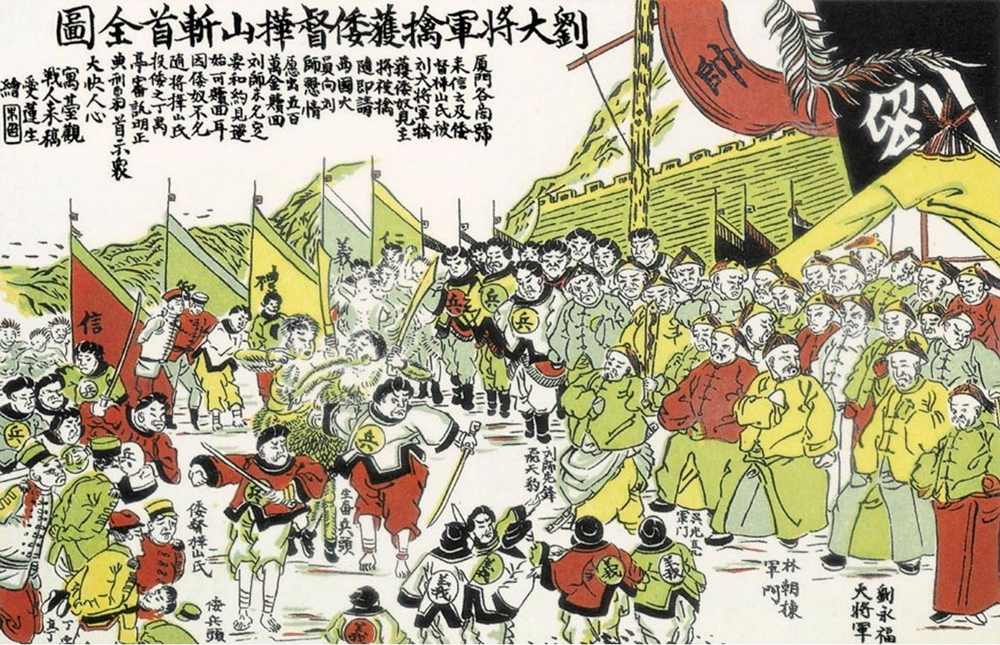
歷史向來不是什麼冰冷客觀的檔案庫,它更像是一場由恐慌人類精心編織的心理安慰劇。時間回到一八九五年,清朝在甲午戰爭中慘敗,簽下割讓臺灣與澎湖的不平等條約,如同輸光家產的賭徒般狼狽。此時,率領殘部在臺灣堅持抗日的黑旗軍將領劉永福,瞬間成了滿清百姓心中的民族救星。面對殘酷血淋淋的現實,焦慮的人們不願意接受失敗,於是,史上最精緻的手工假新聞就此誕生。

當時的大上海是遠東的出版中心,市面上除了黑白畫報,還有色彩鮮豔的新聞年畫。其中一張流傳甚廣的彩色畫作,活靈活現描繪了劉永福陣前生擒日本首任臺灣總督樺山資紀、甚至將其斬首的壯觀場景,旁邊還有「生番」勇士助陣的熱血情節。畫面張力十足、爽感滿分,唯一的缺點是:這全都是畫師憑空捏造的幻想。

這究竟是惡意造謠,還是集體的精神自慰?答案是後者。在甲午戰敗、舉國陷入低迷與屈辱的社會氛圍中,上海的畫家們接收到劉永福仍在抵抗的微弱消息,立刻將真假難辨的傳言無限放大,神化劉將軍的戰功。這類年畫在中國與臺灣之間來回流傳,滿足了雙方對抗日勝利的強烈渴望。用現代的眼光來看,這些圖像百分之百是偽造的「假新聞」;但在當時,它卻是撫慰社會創傷、投射集體焦慮的精神鴉片。

人類基因裡對「真相」的追求,向來在「自我感覺良好」的渴望面前不堪一擊。無論是今天演算法推波助瀾的網路假訊息,還是一百多年前上海街頭販售的抗日年畫,人類從未改變:我們不喜歡面對失敗的真相,我們隻想看見英雄痛宰反派的爽快劇本。下次當我們嘲笑古人好騙時,別忘了人類製造幻覺的功力從未退步,隻不過是把木刻年畫換成了發光的手機螢幕罷了。


The 19th-Century Clickbait: When Fake News Was Hand-Painted Propaganda


The 19th-Century Clickbait: When Fake News Was Hand-Painted Propaganda

History is rarely a sterile archive of cold, objective facts; more often, it is a grand, comforting fairy tale manufactured by terrified humans who simply refuse to accept reality. Step back to 1895. The Qing Empire had just suffered a humiliating defeat in the First Sino-Japanese War, forced to hand over Taiwan and the Pescadores to Japan like a bankrupt gambler paying off a debt. Enter General Liu Yongfu, the rugged commander who dug in his heels to lead Taiwan’s short-lived Democratic Republic resistance. To a shell-shocked mainland public desperate for a shred of dignity, Liu became an instant folk hero. And what do humans do when reality is too grim to bear? They invent a better one.

Enter the magnificent world of late-nineteenth-century mass media. Shanghai was the booming publishing hub of the era, churning out black-and-white pictorials and vibrant, color-saturated "news New Year prints." Among them was a masterpiece of wishful thinking: a dazzling illustration depicting General Liu Yongfu single-handedly capturing Japan's Taiwan Governor-General, Kabayama Sukenori, while decapitating him, flanked by enthusiastic indigenous allies joining the anti-Japanese crusade. It was thrilling, dramatic, and entirely, catastrophically fake.

Was it malicious disinformation? Not quite. It was something far more human: 19th-century clickbait born of collective desperation. Crushed by military defeat and weeping over indemnity payments, Chinese society craved a hero. When whispers drifted across the strait about Liu’s fierce resistance, Shanghai illustrators took loose rumors, mixed them with pure, unadulterated fantasy, and weaponized imagination to soothe an entire nation's bruised ego. These prints flowed back into Taiwan, creating a bizarre feedback loop where rumors birthed art, and art birthed national myths. Today, we would flag these prints with a stern community note warning of manipulated media. Back then, they were psychological armor—a collective coping mechanism wrapped in red and gold ink.

Human nature remains profoundly unchanged by our shiny new algorithms. Whether it is a viral panic on social media today or a hand-painted woodblock print in 1895, our evolutionary wiring hungers for narrative over truth. We don't want to hear that our side is losing; we want to see the villain beheaded by our champion, even if he is sitting safely in a Shanghai studio holding a paintbrush. The next time you roll your eyes at modern propaganda, remember that fake news didn't start with the internet—it started the moment humans discovered they could print their own delusions.


老虎的菜單:中產階級不是為了民主出走,而是發現自己成了主菜


老虎的菜單:中產階級不是為了民主出走,而是發現自己成了主菜

長期以來,西方書齋裡的民主鬥士總是抱著一種浪漫的幻想:以為所有拖家帶口離開中國的富裕階層,必然是受到了西方自由精神的感召,滿懷著對民主人權的崇高信仰才選擇出走。這簡直是天大的誤解。正如那些真實「潤」出去的中產階級所展現的,他們多半不是什麼民運分子,反而是過去在體制內混得風生水起、甚至比西方中產過得更舒服的既得利益者。他們對共產黨的熟悉程度,遠超過那些只懂空談理論的海外評論家。

這群人的生存哲學,其實就是一套高段位的叢林生存法則。正如受訪者大龍所比喻的:你生活在一個有老虎的危險叢林裡,但你熟悉牠的習性。只要不去招惹牠、按時餵食,你就能在叢林的中上層過上極度舒適的生活——靠著廉價家政與體制紅利,物質享受甚至比外國中產還要優渥。對他們而言,自由民主從來不是抽象的宗教信仰,只要老虎不威脅到日常生活,他們完全可以跟這套制度相安無事。

然而,歷史的殘酷之處正在於:老虎可以共富貴,卻絕對不可以共患難。當經濟繁榮不再、當叢林的資源枯竭時,凶猛的野獸絕不會冒險跨界去跟別人爭食,而是會第一時間把爪子轉向自己地盤裡養得油光水滑的動物。過去那些以為只要乖乖聽話就能歲月靜好的精算師們,直到鐵拳砸在自己頭上時才驚覺,當權力陷入危機,曾經的免死金牌瞬間變成了催命符。

人類基因裡對安逸與可預測性的追求,總是讓人願意忍受局部的壓迫,直到風險超越了容忍極限。中國這波中產階級的大逃亡,不是因為他們一夜之間成了自由主義的信徒,而是因為他們終於讀懂了歷史最黑暗的底牌:在絕對權力的叢林裡,當老虎肚子餓了的時候,最先被端上餐桌的,永遠是那些自以為最安全、養得最肥美的家畜。